How to Choose a Big Coffee Machine for Office Use
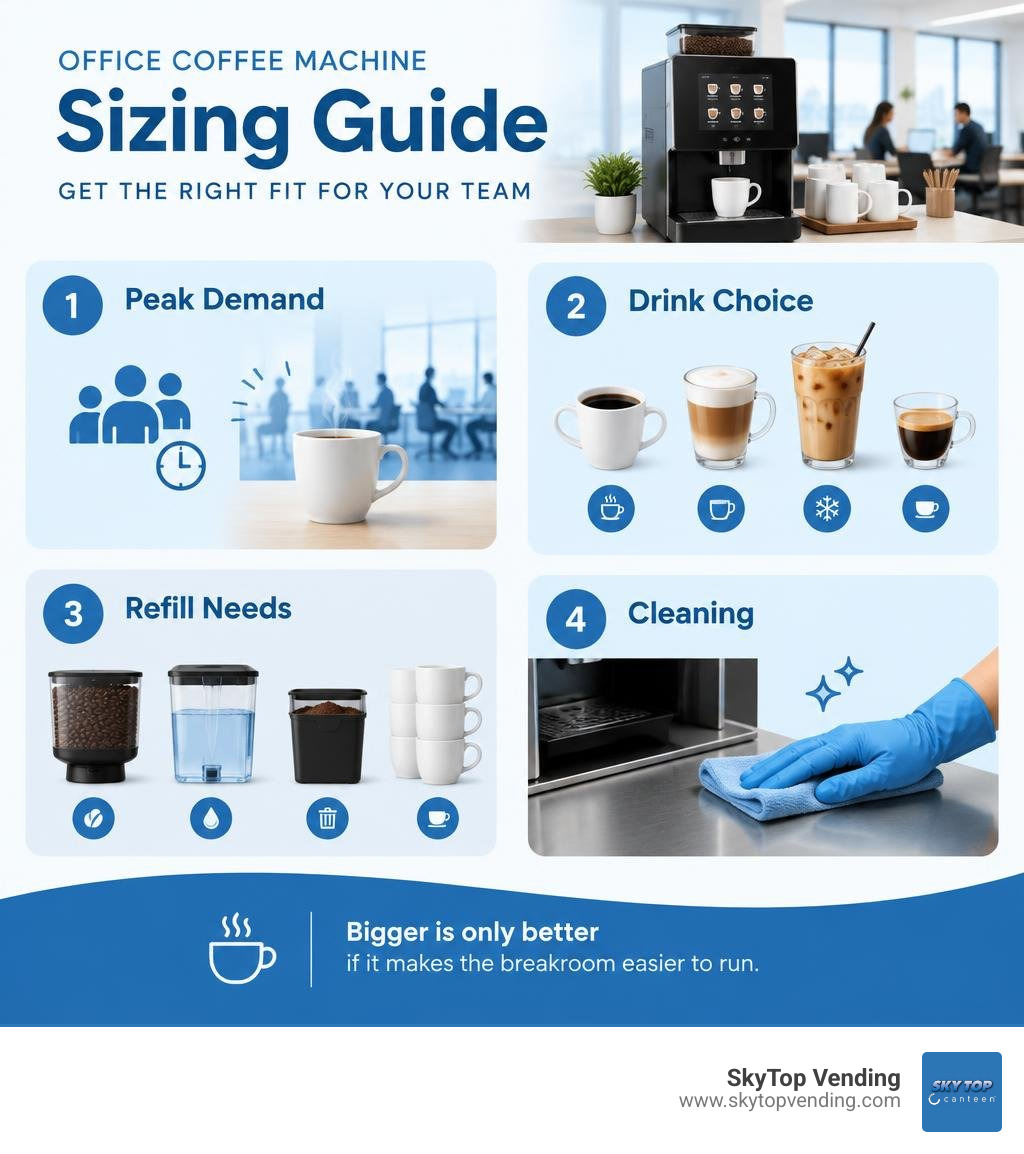
A big coffee machine for office use is worth choosing when a smaller brewer cannot keep up with your busiest break. Start with how many cups your team drinks during the morning rush, not just over a full day. Then choose the type of coffee people want: batch-brewed coffee for quick group service or individual drinks for more choice. Check how often someone will need to refill, empty, and clean the machine. Bigger is only better if it makes the breakroom easier to run.
I’m Gil Lipkin, and I’ll walk you through the choices that matter most.
Evaluating Machine Types: When to Choose a Big Coffee Machine for Office Breakrooms
Choosing a coffee maker for a workplace is completely different from picking one for your home kitchen. In an office, your machine faces back-to-back brewing cycles, varied drink preferences, and users with zero barista training. If you select a model that is too small, you create morning bottlenecks and leave team members frustrated before their first meeting even begins.
To pick the right equipment, you must balance brewing velocity, beverage versatility, and maintenance workload. Exploring top commercial coffee machines for every office need helps clarify how different commercial setups perform under pressure.
| Machine Type | Best Suited For | Key Advantages | Potential Drawbacks |
|---|---|---|---|
| Super-Automatic Espresso | Executive suites, modern offices, diverse beverage preferences | Bean-to-cup quality, specialty drinks (lattes, cappuccinos), intuitive touchscreens | Higher upfront cost, requires daily milk line cleaning |
| Commercial Batch Drip | High-volume morning meetings, shift work, traditional black coffee drinkers | Rapid output (10–12 cups per batch), simple operation, low maintenance | Limited drink variety, coffee can sit on warming plates |
| Commercial Single-Serve Pod | Low-to-medium traffic breakrooms, quick customized cups | Broad flavor selection, zero brewing skill required, speedy cycles | Higher cost per cup, recurring pod packaging waste |
| Industrial Urns & Multi-Tank | Large corporate campuses, cafeteria catering, massive events | Giant batch sizes (60–110 cups), keeps coffee hot for hours | Basic black coffee only, requires dedicated storage and high-wattage power |
Super-Automatic Espresso Systems vs. Commercial Drip Brewers
Super-automatic machines grind whole beans on demand, tamp the grounds, extract espresso at commercial pressure (typically 15 to 19 bar), and steam milk at the push of a single button. Flagship models like the Jura GIGA 10 ($5,499.00) feature two independent grinders and dual bean hoppers, allowing employees to switch between dark roasts and decaf without manual adjustments. Similarly, dual-outlet commercial espresso machines such as the Nespresso Momento Coffee & Coffee (3,211.81 EUR) leverage 19 bar extraction systems and 4.6-liter reservoirs to pull two customized drinks simultaneously, cutting wait times in half during peak hours.
On the other hand, commercial drip brewers prioritize sheer output over drink variety. A unit like the Bunn Speed Brew ($176.99) brews a full 10-cup carafe in five minutes flat by keeping internal water constantly heated to brewing temperature. If your workplace values quick black coffee for large gatherings, batch drip systems deliver unmatched volume at a fraction of the hardware cost.
Single-Serve Commercial Pod Systems vs. Batch Brewing
Single-serve commercial brewers solve the variety dilemma without requiring complex espresso mechanics. Systems like the Keurig K155 Office Pro use a 90-ounce water reservoir that delivers up to 18 standard cups between refills. Operating with a 1400-watt internal heater, it produces an 8-ounce beverage in 48 to 55 seconds. Its full-color interactive touchscreen makes selection simple for employees and visiting clients alike, earning a 5-star rating from 76% of users across more than 5,300 reviews.

While single-serve pods eliminate leftover stale pots, high-volume offices with hundreds of daily drinks often find that continuous batch brewing or bean-to-cup setups offer much lower cost per cup over time.
Sizing and Capacity: Calculating the Right Specs for Your Team

Buying an undersized machine leads to constant refill alerts, overflowing drip trays, and burned-out heating elements. When considering upgrading your workplace coffee setup, calculate your breakroom’s capacity based on peak demand between 8:00 AM and 10:00 AM rather than average daily consumption.
Matching Reservoir and Hopper Capacity to Employee Count
For smooth operation, your machine’s bean hopper and water reservoir should handle peak morning demand without requiring staff intervention. A commercial bean-to-cup system like the Kaffeevollautomat KV1 Classic (2.249,00 €) is built precisely for this level of traffic. It produces up to 60 cups per hour using its dual-outlet system (or 40 cups per hour on single outlet), supported by a generous 1000-gram bean hopper and an internal grounds container that holds up to 35 spent coffee pucks before needing to be emptied.
Use these general office sizing benchmarks:
- 10–25 Employees: 80–90 oz water reservoir or entry-level commercial brewer; 250g–500g hopper.
- 25–75 Employees: 4-liter to 5-liter plumbed reservoir; 1000g hopper; minimum 30-puck waste capacity.
- 75–150+ Employees: Direct-plumbed dual-spout bean-to-cup unit (60+ cups/hour) or commercial batch brewer with multi-station satellite carafes.
High-Volume Powerhouses: Industrial Urns and Multi-Compartment Brewers

When an organization hosts large corporate training sessions, all-hands meetings, or runs high-headcount operations, standard office coffee makers quickly become bottlenecks.
For large-scale events, commercial 110-cup coffee urns like the VEVOR 1500W stainless steel dispenser ($107.99) can brew up to 110 cups (150 ml each) at an average speed of about one minute per cup, maintaining holding temperatures between 90°C and 98°C.
For permanent installations in high-volume settings, industrial 60-liter multi-compartment brewers like the Cafeteira Industrial Monarcha MI43 (R$ 7.618,08) provide enterprise-grade throughput. Running on a robust 6000W heating system, this unit uses three independent 20-liter compartments (20 + 20 + 20 liters) with individual thermostatic controls from 20°C to 120°C, enabling your breakroom or cafeteria staff to brew, hold, and dispense multiple coffee varieties simultaneously.
Direct Plumbing and Drainable Internal Water Tanks
Pouring pitchers of water into a tank every twenty minutes is one of the fastest ways to derail workplace productivity. For offices with more than 20 regular coffee drinkers, choosing a direct-line plumbed machine with integrated water filtration protects beverage flavor and prevents scale buildup.
If your workplace requires equipment mobility—such as catering corporate events or seasonal facility shutdowns—ensure your unit features an internal drainable hot water tank. Commercial machines like the Keurig K155 include dedicated rear drainage lines that let you empty internal tanks in under two minutes, preventing water stagnation, bacterial growth, and freeze damage during transport.
Key Features That Define the Best Big Coffee Machine for Office Workplaces
Selecting hardware for shared corporate environments means looking beyond brewing specs to user ergonomics and durability. When evaluating comprehensive business coffee solutions, prioritize features that keep machines running reliably without constant service calls.
Commercial Certifications, Build Quality, and UL Commercial Ratings
Household coffee makers are not engineered for continuous commercial duty cycles. Placing a residential machine in a corporate breakroom can violate local electrical codes and void corporate property insurance policies if an electrical failure occurs.
Always look for a UL Commercial rating or equivalent commercial sanitation and safety certifications. A commercial rating verifies that internal wiring, thermal cutoffs, and heating elements (such as heavy-duty 1400W to 2700W heaters) are certified for non-stop enterprise operation. Combine this with commercial-grade brushed stainless steel housing to withstand heavy daily handling.
Grinding Systems, Milk Handling, and User Skill Requirements
If a machine requires complex manual steps, employees will make mistakes, leading to messy countertops and clogged group heads. A big coffee machine for office breakrooms must bridge the gap between high beverage quality and effortless operation.
- Assisted Semi-Automatic: Machines like the Breville Barista Touch Impress ($1,439.99) incorporate assisted tamping levers and automated milk frothing wands with touch navigation, guiding users through espresso extraction without manual guesswork.
- Super-Automatic Convenience: Units such as the Miele CM 7750 ($4,499.00) use three independent bean hoppers and automatic grind-size adjustment to deliver tailored drinks at the touch of an icon.
- Mid-Range Commercial Automation: Systems like the KitchenAid KF7 ($1,449.95) provide full bean-to-cup automation, stainless steel builds, and vibrant LCD interfaces for quick beverage customization.
Maintenance Routines, Automatic Cleaning, and Descaling Cycles
Breakroom cleanliness directly influences coffee flavor and machine lifespan. High-end automated machines feature self-rinsing cycles that flush the brew group every time the unit powers up or down.
When stocking your office breakroom, choose systems with clear touchscreen prompts for descaling, bean refills, and waste bin emptying. Automated milk line steam purging is especially essential to prevent dairy buildup and maintain health standards.
Cost of Ownership: Budget Drip Brewers vs. Premium Super-Automatics
Evaluating breakroom equipment requires looking at the total cost of ownership (TCO) over a three-to-five-year period rather than just the initial sticker price.
| Cost Component | Entry-Level Drip (e.g., Bunn Speed Brew) | Commercial Pod (e.g., Keurig K155) | Super-Automatic Espresso (e.g., Jura GIGA 10) |
|---|---|---|---|
| Initial Hardware | $150 – $300 | $250 – $400 | $2,000 – $5,500+ |
| Cost per 8 oz Serving | $0.08 – $0.15 (bulk ground) | $0.50 – $0.85 (single pod) | $0.12 – $0.25 (whole bean) |
| Annual Cleaning Supplies | $30 – $50 (vinegar/descaler) | $50 – $80 (descaling fluid) | $150 – $300 (milk cleaner, water filters, cleaning tabs) |
| Staff Labor & Time | Low (batch brewing) | Minimal (immediate cup) | Low (automated one-touch) |
| 5-Year Est. Cost (30 Users) | ~$3,500 | ~$22,000 | ~$11,000 |
Analyzing Upfront Purchase Price vs. Long-Term Maintenance Costs
While a super-automatic bean-to-cup machine has a higher initial price tag ($2,000 to $5,500+), its ongoing operational cost per cup is substantially lower than single-serve pod systems. Buying specialty whole beans in bulk yields significant cost savings over individual pods. Over several years of steady office consumption, the lower cost per cup of whole beans often offsets the higher machine purchase price.
Finding the Best Big Coffee Machine for Office Budgets and Luxury Breakrooms
For companies balancing budget constraints with premium workplace amenities, reviewing corporate coffee machine procurement strategies helps you decide between outright purchase and full-service breakroom programs. Managed breakroom programs provide modern bean-to-cup equipment, regular maintenance, and routine product restocking without high upfront capital expenditure.
Frequently Asked Questions About Commercial Office Coffee Equipment
How many employees justify buying a direct-plumbed commercial coffee machine?
Offices with 20 or more employees generally see immediate productivity and convenience benefits from direct-plumbed machines. Plumbing eliminates multiple daily water refills, prevents dry-tank errors, and ensures incoming water passes through commercial multi-stage carbon filtration for consistent taste.
What does a UL Commercial rating mean for an office breakroom coffee maker?
A UL Commercial listing verifies that the appliance complies with rigorous electrical, thermal, and mechanical safety standards established by Underwriters Laboratories for high-demand business environments. Unlike residential brewers, UL-certified units feature commercial-grade wiring and fire-resistant materials, meeting corporate lease terms and workplace safety regulations.
Are super-automatic bean-to-cup machines difficult for office staff to clean?
Modern commercial super-automatics feature automated, software-guided cleaning programs. Most models perform automatic hot-water rinses when powered on or off. Daily breakroom maintenance usually takes less than five minutes: emptying the internal grounds bin, rinsing the drip tray, and running an automated steam cycle through the milk delivery line.
Conclusion
Choosing the right commercial coffee machine comes down to matching your equipment’s capacity, drink versatility, and maintenance needs to your team’s daily morning rhythm. Whether your workspace thrives on rapid batch drip coffee, single-serve pods, or premium bean-to-cup espresso drinks, sizing your machine correctly keeps your team energized and your mornings running smoothly.
At SkyTop Vending, we have delivered tailored corporate refreshment services across the Las Vegas Valley since 1977. Backed by our 99.4% client retention rate and our guiding philosophy—”Service the way YOU like it”—we provide full-service breakroom solutions ranging from state-of-the-art office coffee and pantry supplies to micro markets and water filtration. Ready to find the perfect brewing setup for your team? Explore high-performance commercial coffee machines for your office and let our specialists design a custom breakroom program for your workplace today.