
Choosing a vending provider involves more than picking the right snacks and drinks. A vending machine service contract helps define who provides the equipment, how machines are stocked and maintained, what costs may apply, and how the business relationship works over time.
For Las Vegas business owners and facility managers, reviewing these details before installation can prevent misunderstandings and make workplace refreshments easier to manage. Whether you’re considering vending for an office, hotel, warehouse, or healthcare facility, understanding the service agreement is an important first step.
If you’re exploring vending machine service in Las Vegas, this guide explains what to check in a vending contract, which questions to ask, and how to evaluate a proposed service arrangement before making a decision.
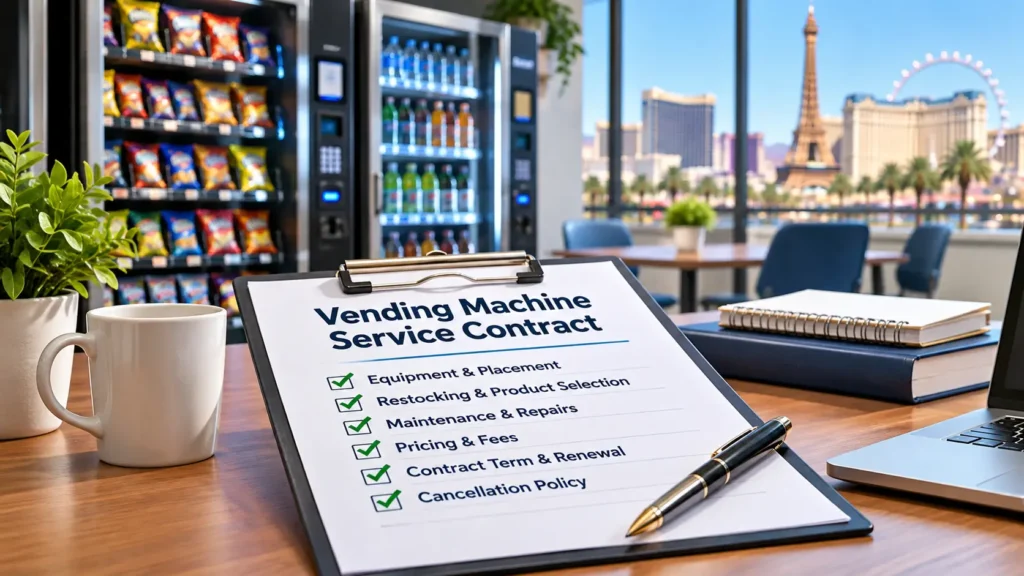
What Is a Vending Machine Service Contract?
A vending machine service contract is an agreement between a vending operator and a business or property manager that describes how vending equipment will be installed, operated, stocked, and serviced at a particular location. It may also address equipment ownership, product pricing, financial responsibilities, the length of the arrangement, and procedures for ending the service.
The precise terms depend on the provider and the type of vending program. Some agreements cover a complete operator-managed service, while others involve equipment leasing, purchasing, or separate maintenance arrangements. Businesses should understand which model is being proposed before comparing offers.
A well-defined agreement provides a common reference for both parties. It helps the facility manager understand what to expect and gives the operator a clear picture of the location’s staffing patterns, equipment requirements, service access, and product preferences.
For a Las Vegas workplace, the objective should be a dependable vending arrangement that fits the facility rather than a contract based on assumptions about employee demand or day-to-day operations.
Why Vending Contracts Matter for Las Vegas Businesses
Las Vegas businesses operate in a variety of environments, from corporate offices and medical facilities to hotels, entertainment venues, and distribution centers. Each location has different operating hours, security requirements, available space, and customer expectations.
For example, an office with standard weekday hours may need a different restocking schedule from a hospitality facility with employees working overnight. A warehouse in North Las Vegas may prioritize cold drinks and high-demand snacks, while a healthcare workplace may need convenient food options across multiple shifts.
These differences should influence the service agreement. A contract that describes the actual workplace requirements can help businesses avoid uncertainty about deliveries, repairs, equipment access, and ongoing communication.
Before signing, take time to review the following ten areas.
10 Things to Check Before Signing a Vending Machine Contract
1. Equipment Type, Ownership, and Placement
Start by confirming exactly which vending machines will be installed and who owns them. The agreement should identify the equipment arrangement and explain whether the business is purchasing, leasing, or receiving access to operator-owned machines.
Ask whether the proposed setup includes snack machines, beverage machines, refrigerated food equipment, or combination units. The available space, electrical connections, accessibility, and expected purchasing demand should all influence equipment selection.
It’s also important to clarify who can relocate the machines if the breakroom is remodeled or the business changes its floor plan. Establishing these details before installation makes future adjustments easier to coordinate.
Questions to ask:
- Who owns the vending equipment?
- What machine types and quantities are included?
- Who is responsible for delivery and installation?
- Can equipment be relocated or replaced if workplace needs change?
2. Installation Requirements and Site Responsibilities
Vending machine installation involves more than positioning equipment against a wall. The location needs appropriate access, sufficient space for customers, and electrical connections compatible with the proposed machines.
Review who is responsible for preparing the installation area and whether any additional electrical work, connectivity, or site modifications are needed. If the equipment requires special access for delivery or servicing, those requirements should be discussed before the installation date.
This consideration is particularly relevant for Las Vegas hotels, casinos, medical facilities, and commercial buildings with security procedures or restricted loading areas.
A clear installation plan can reduce disruption and help both parties understand their responsibilities from the beginning.
3. Product Selection and Pricing
The snacks and beverages offered through a vending machine directly affect how useful the service becomes for employees and visitors. Before finalizing a vending service agreement, discuss the product categories available and how purchasing preferences will be considered.
Some workplaces prefer traditional snacks and soft drinks, while others want a greater selection of bottled water, protein bars, fresh food, or better-for-you options. Product availability will also depend on the equipment selected and the level of demand at the location.
Businesses should understand how product requests are handled, who determines retail prices, and whether the agreement describes a process for future price adjustments.
Questions to ask:
- Can employees request specific snacks or beverages?
- How are slow-selling products replaced?
- Who determines vending machine product prices?
- How are pricing changes communicated?
- Are refrigerated or fresh food options suitable for the proposed equipment?
A customized product selection can make vending more useful than a standard assortment that never changes.
4. Restocking Frequency and Inventory Management
An important part of any vending machine service contract is understanding how frequently the equipment will be stocked. The appropriate schedule depends on employee traffic, machine capacity, purchasing activity, and the hours when the workplace is occupied.
A high-traffic location may need more frequent attention than a smaller office. Businesses with overnight shifts should also discuss how the operator plans to maintain product availability throughout the day and evening.
Modern vending technology can support inventory planning by helping operators review sales and machine activity. For example, SkyTop Vending uses Smart Service technology that generates updates approximately every six hours, providing information about product movement and possible maintenance needs.
However, monitoring technology and a specific restocking commitment are not the same thing. Businesses should ask how the provider translates that information into service visits and product replenishment.
What to clarify: How is the restocking schedule established, and what happens when popular products sell out earlier than expected?
5. Maintenance, Repairs, and Customer Support
Even well-maintained vending equipment can experience occasional problems. A payment reader might stop working, a product might fail to dispense, or refrigeration equipment might require attention.
Your vending contract should clarify how customers report issues, who is responsible for repairs, and how service requests are handled. Ask whether maintenance is included in the proposed arrangement or subject to separate charges.
SkyTop Vending uses ZippyAssist, a customer support system that enables users to report vending machine issues, request refunds, and provide product feedback. The company’s machines feature assistance labels that help customers connect with the support platform.
For a Las Vegas business, convenient reporting tools can reduce the need for office managers to personally coordinate every vending machine issue. Nevertheless, any specific repair response commitments should be confirmed in the proposed service terms.
6. Payment Methods and Refund Procedures
Payment convenience is another consideration when comparing vending machine contracts. Traditional cash payments may still be relevant at some locations, while modern equipment can offer card readers and contactless payment options.
Before installation, confirm which payment methods are supported by the proposed machines. Also ask whether any payment-related charges affect customers or the business and how those charges would be communicated.
Refund procedures deserve equal attention. Employees should know how to report an unsuccessful purchase and where to request assistance without having to search for the vending company’s contact information.
Clear payment and refund information can help create a more convenient experience for employees, visitors, and facility management teams.
7. Service Fees, Commissions, and Financial Responsibilities
Not all vending contracts use the same financial structure. Costs and revenue arrangements may vary depending on equipment ownership, location demand, the products offered, and any services the business chooses to subsidize.
Some proposals may include equipment charges, service fees, commissions, or other financial conditions. A business should request a clear explanation of every applicable charge rather than assuming that all vending programs work the same way.
If a commission or revenue-sharing arrangement is proposed, ask how it is calculated and when payments are made. If the employer wants to subsidize snacks or beverages, confirm how that arrangement affects product prices and billing.
Before agreeing, clarify whether the proposal includes:
- Equipment, delivery, or installation charges
- Ongoing maintenance or service fees
- Minimum purchasing or sales requirements
- Revenue-sharing or commission terms
- Employer-funded product subsidies
- Additional payment processing or related charges
The objective is to understand the full financial arrangement before making a commitment. Actual pricing and commercial terms should always be confirmed directly with the provider.
8. Contract Length, Renewal, and Cancellation
The duration of a vending service agreement affects how easily a business can adjust its refreshment program in the future. Before signing, read the sections covering the start date, initial term, renewal conditions, notice requirements, and termination process.
Some agreements may continue automatically unless one party provides notice within a specified period. Others may provide different renewal or cancellation arrangements. Neither structure should be assumed without reviewing the actual terms.
Businesses should also consider how the agreement handles changes in staffing, relocation, business closure, or dissatisfaction with the service.
Ask what happens if equipment needs to be removed before the agreement ends and whether any notice periods or charges would apply. These details are particularly important for companies with changing facility requirements.
9. Exclusivity and Flexibility
Certain vending agreements may include exclusivity provisions that affect whether a business can use another vending provider or introduce additional refreshment services.
Before accepting any such provision, determine exactly what it covers. A restriction could relate to particular products, equipment categories, designated areas, or other parts of the service arrangement.
Consider whether your workplace might eventually need additional equipment, a different vending format, or complementary breakroom solutions.
For example, a business may begin with traditional vending machines and later consider office coffee or a micro market. If future flexibility matters, discuss how additional services would be handled under the proposed agreement.
For more background on evaluating providers, read our guide to vending machine companies in Las Vegas.
10. Insurance, Liability, and Equipment Removal
A vending contract should also address responsibility for equipment damage, accidents, losses, and other potential problems associated with operating machines at a commercial location.
Businesses may want to request information about the provider’s insurance coverage and understand how responsibilities are allocated between the operator and the property owner. Requirements can vary based on the facility and the nature of the arrangement.
It’s also worth reviewing the equipment removal process. If the service ends, who is responsible for disconnecting and removing machines? How will access be coordinated, and what happens if the equipment location needs to be restored?
Clear answers make it easier to plan for both installation and an eventual service transition.
Vending Machine Contract Checklist for Facility Managers
Use this checklist when comparing vending machine service proposals for your Las Vegas business. It helps identify important details that should be clarified before an agreement is signed.
| Contract Item | What to Confirm |
| Equipment | Machine types, quantity, ownership, and placement |
| Installation | Delivery, setup, power, access, and site responsibilities |
| Products | Available categories, customization, and product changes |
| Pricing | Retail prices and procedures for price adjustments |
| Restocking | Service schedule and response to low inventory |
| Maintenance | Repair responsibilities and issue-reporting process |
| Payments | Accepted methods, potential fees, and refund handling |
| Financial terms | Applicable costs, commissions, and subsidies |
| Contract duration | Initial term, renewal, notice, and cancellation |
| Exclusivity | Restrictions affecting other vending or refreshment services |
| Insurance | Coverage and allocation of liability |
| Equipment removal | Responsibilities and procedures when service ends |
A practical approach is to review this table with each potential vending provider and record the answers. If an important detail affects your business operations, ask for it to be documented in the final proposal or agreement.
Warning Signs to Watch for in Vending Contracts
Not every unclear contract term indicates a problem, but some details deserve additional attention before a business commits to a vending service.
A proposal that does not identify the equipment arrangement or explain financial responsibilities may be difficult to evaluate. Similarly, vague promises about regular restocking or quick repairs are less useful than a clear explanation of how service requests are managed.
Be cautious about automatic renewal provisions that are difficult to understand, cancellation conditions that have not been explained, or exclusivity clauses that could limit future workplace refreshment options.
Another concern is a lack of clarity about product changes. If employees consistently request different snacks or beverages, the business should understand whether and how the vending operator reviews those preferences.
The best approach is to ask questions early, compare written responses, and make sure the agreement reflects what was discussed during the initial consultation.
How Different Las Vegas Workplaces Should Evaluate Vending Agreements
A vending machine contract should reflect the facility’s actual operating needs. Although the basic contract categories may remain similar, different industries should emphasize different service considerations.
Corporate Offices in Las Vegas
Office managers should consider the number of employees on-site, typical attendance patterns, and whether staff use the breakroom throughout the day. Product selection, convenient payment methods, and a manageable restocking schedule can be especially important.
Organizations planning a wider refreshment program may also want to coordinate vending with coffee, pantry, or water services. Our guide to better office coffee and vending services explores how these options can work together.
Hotels and Hospitality Facilities
Hotels and hospitality businesses often have multiple shifts, security procedures, and designated employee areas. Facility managers should discuss equipment access, servicing arrangements, and product availability during hours when other food options may be limited.
The proposed contract should reflect the location’s operational requirements rather than assuming that every workplace follows a standard daytime schedule.
Warehouses and Distribution Centers
Warehouse facilities in North Las Vegas and surrounding industrial areas may prioritize convenient beverages, popular snacks, and equipment that can serve employees during scheduled breaks.
When reviewing vending contracts, managers should consider shift changes, expected purchasing volume, machine placement, and service access. Clear communication about these needs can help determine an appropriate equipment and restocking plan.
Hospitals and Healthcare Workplaces
Healthcare facilities may have employees working around the clock, making convenient food and beverage access important outside typical dining hours.
When discussing a vending arrangement, facility managers should clarify sanitation expectations, equipment locations, visitor access, and service procedures that align with the property’s operational requirements.
How to Compare Vending Machine Service Proposals
Comparing proposals becomes easier when every provider is asked to address the same requirements. Start with information about your facility, including approximate daily occupancy, operating hours, existing breakroom equipment, and preferred products.
Next, review the proposed machines and service arrangement. Look beyond the equipment appearance and consider whether the provider has explained restocking, support, payment options, and future adjustments.
Finally, compare the written terms rather than relying entirely on verbal explanations. A proposal that clearly outlines responsibilities and service expectations can be easier to manage over time, even when different operators recommend different equipment.
The aim is to select a vending arrangement that fits your workplace’s daily requirements and provides clarity for both the business and the service provider.
Why Consider SkyTop Vending for Your Las Vegas Workplace?
SkyTop Vending has served the Las Vegas Valley since 1977. As a three-generation family-owned company and Canteen franchise partner, SkyTop combines local service experience with modern vending technology and a broad range of workplace refreshment solutions.
The company provides traditional vending machines, micro markets, office coffee, pantry services, and water and ice solutions. Its vending program includes customized product selections, equipment support, Smart Service monitoring, and access to ZippyAssist for customer assistance.
These capabilities can help businesses explore a vending setup suited to their workforce and facility. Specific commercial terms, equipment arrangements, and service commitments should be reviewed directly with SkyTop before entering into an agreement.
Whether you manage a small office or a large commercial facility, the first step is understanding your workplace’s refreshment needs and discussing suitable equipment and service options.
Choose a Vending Service Agreement That Fits Your Business
A vending machine contract should give your business confidence in the service arrangement, not leave you guessing about equipment, restocking, maintenance, or future responsibilities. Taking time to review the details can help you select a solution that supports employee convenience and fits your workplace operations.
For Las Vegas businesses, local service coordination, appropriate equipment, and clear communication can all contribute to a better vending experience. Whether you’re planning a new installation or evaluating an existing vending provider, asking the right questions is an important part of the process.
Ready to discuss vending options for your workplace?
Contact SkyTop Vending to share your facility requirements and request a breakroom survey. Our team can help you explore vending equipment and refreshment solutions for your Las Vegas business.
Frequently Asked Questions
What should a vending machine service contract include?
A vending machine service contract should clearly describe equipment ownership, installation responsibilities, product selection, pricing arrangements, restocking, maintenance, payment options, and support procedures. Businesses should also review the agreement’s duration, renewal conditions, termination provisions, and any applicable financial obligations.
How long do vending machine contracts usually last?
Vending machine contract lengths vary by provider and commercial arrangement. Some agreements establish a fixed initial term, while others offer different renewal or cancellation structures. Businesses should confirm the exact duration, notice requirements, and termination conditions before signing.
Who is responsible for vending machine repairs?
Repair responsibilities depend on the service agreement and equipment ownership arrangement. In an operator-managed program, the vending provider may handle equipment maintenance, but the contract should clearly identify the responsible party, how issues are reported, and whether additional repair charges can apply.
Can a business request different snacks or beverages?
Many vending programs allow businesses to discuss product preferences and request assortment adjustments. The available selections depend on equipment capabilities, purchasing demand, and the provider’s product range. Ask how requests are reviewed and whether the service agreement addresses product changes.
What happens when a vending machine contract ends?
The end of an agreement may involve notice requirements, final financial reconciliation, equipment removal, and coordination of site access. The specific process depends on the contract. Businesses should review these provisions before installation so they understand their responsibilities when the service relationship ends.
Can vending machines be installed in businesses with multiple shifts?
Vending machines can be suitable for workplaces operating beyond standard business hours, including hotels, warehouses, and healthcare facilities. The proposed service arrangement should account for staff schedules, access restrictions, expected demand, and restocking requirements.
How do I get a vending machine service proposal in Las Vegas?
Start by sharing your business location, approximate employee count, operating hours, available space, and preferred products with a vending provider. SkyTop Vending can discuss workplace refreshment options and help determine the next steps for evaluating a suitable vending arrangement.