
How to Choose Office Coffee Machines That Fit Your Team
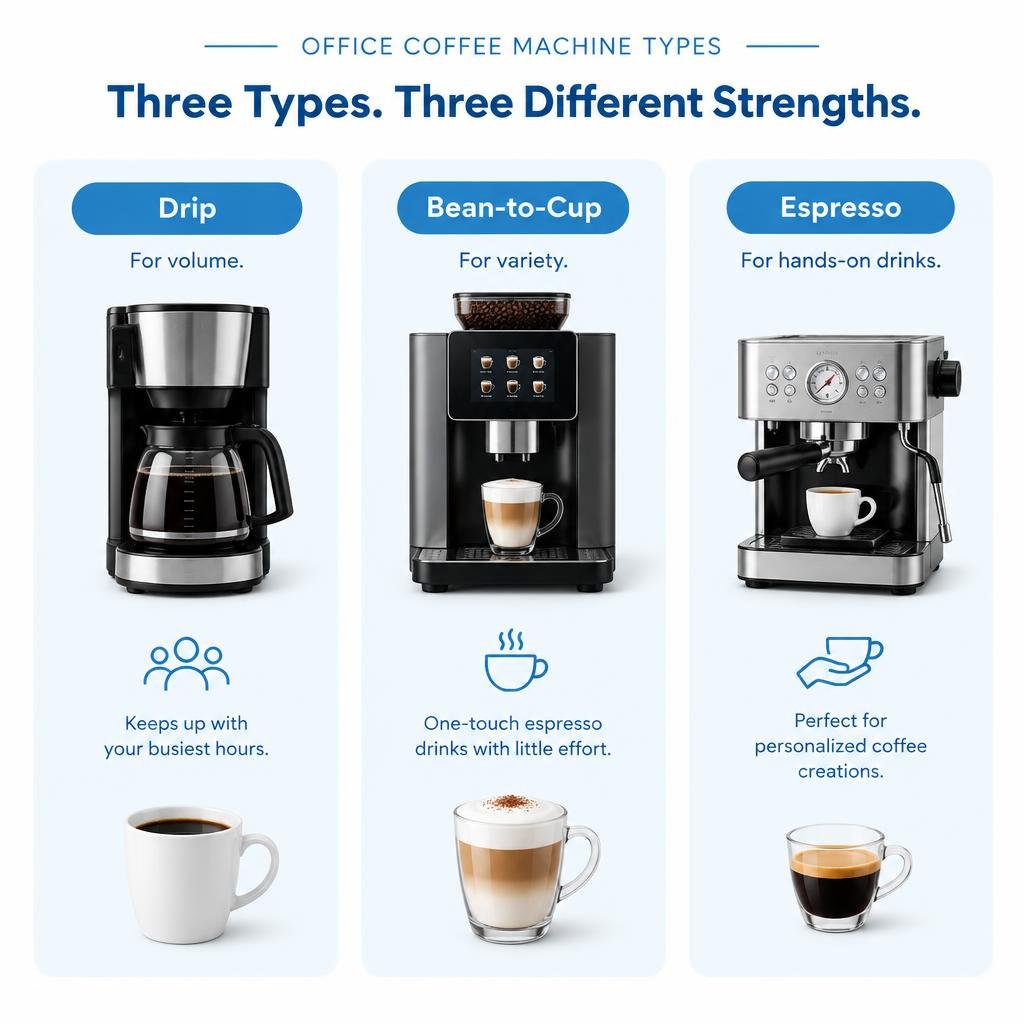
The best office coffee machines match your busiest hour, not just your headcount. Choose a drip brewer if most people want quick black coffee. Choose a bean-to-cup machine if they want one-touch espresso drinks with little effort. For a small team, a compact machine may be enough. For a busy office, look for commercial capacity and a setup that keeps lines short.
The right choice also depends on who will clean and refill it. A machine that is easy to use and maintain makes the breakroom more useful every day. I’m Gil Lipkin, and I’ll help you compare the options before you choose.
Introduction
Providing exceptional coffee in the workplace is one of the highest-return investments an office manager can make. It is not just about keeping mugs full; it directly impacts daily performance and company culture. Extensive workplace research confirms that caffeine improves cognition, concentration, and task efficiency across all roles.
Beyond alertness, the office coffee station serves as a natural gathering point where cross-departmental collaboration happens organically. Brewing high-quality coffee in the breakroom is also dramatically cheaper than employees making multiple mid-morning runs to offsite retail coffee shops. When you upgrade your breakroom with dependable equipment, you cut down on lost productivity while sending a clear signal that leadership values the team’s comfort and daily experience.
Types of Office Coffee Machines: Comparing Drip, Bean-to-Cup, and Espresso Systems
Finding the right system begins with understanding the core categories of commercial brewers. Using a clear cheat sheet to comparing commercial coffee machines helps narrow down options based on your workflow, beverage variety, and expected maintenance.
| Machine Type | Best Suited For | Drink Variety | Speed & Throughput | Skill Level Required |
|---|---|---|---|---|
| Traditional Drip / Batch | High volume, quick morning rushes | Drip black coffee | Very fast (10–12 cups per batch) | Low (fill basket & brew) |
| Single-Serve / Pod | Small offices, diverse flavor requests | Single cups, flavored roasts | Moderate (1 cup every 60 seconds) | None (insert pod & press start) |
| Super-Automatic Bean-to-Cup | Self-serve breakrooms wanting specialty drinks | Espresso, lattes, cappuccinos, Americanos | Fast (30–45 seconds per specialty drink) | None (one-touch touchscreen) |
| Semi-Automatic Commercial Espresso | Coffee-enthusiast teams, hospitality spaces | Custom espresso, artisan milk drinks | Slower (2–3 minutes per drink) | High (grinding, tamping, steaming) |
Traditional Drip and Batch Brewers
Commercial batch brewers remain the workhorses of corporate America. A reliable commercial unit can brew a full 10-cup to 12-cup thermal carafe in five minutes flat. These units excel at serving high volumes of classic black coffee with zero fuss. Because the coffee brews into insulated thermal carafes, it stays hot and fresh without burning on a hot plate.
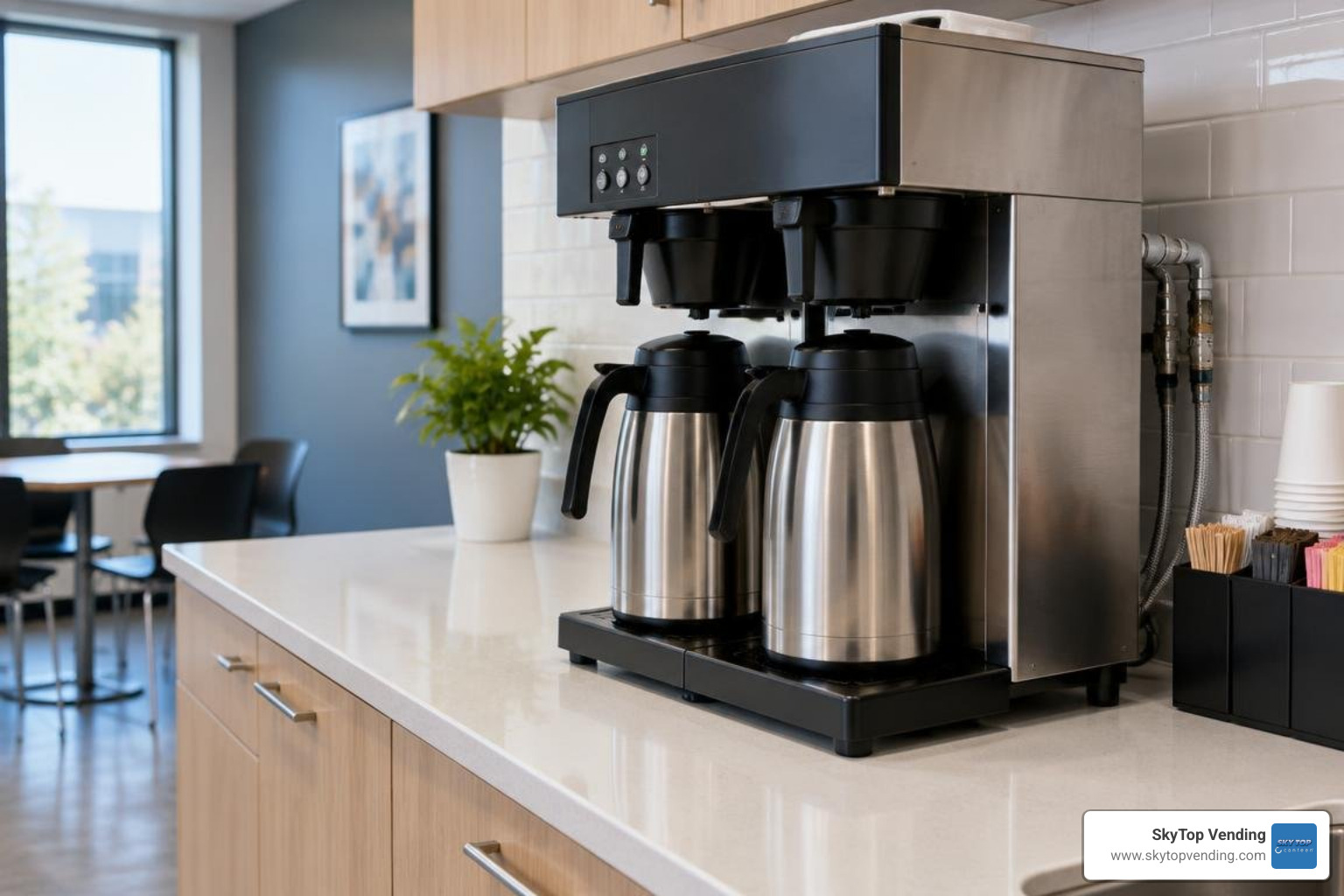
For offices where morning meetings demand large carafes ready to grab and go, traditional batch drip systems offer unbeatable throughput and simple operation.
Single-Serve and Pod-Style Machines
Single-serve pod systems provide individual convenience and allow employees to choose their preferred roast, decaf, or tea. Commercial pod units feature heavy-duty puncture mechanisms and faster water heating recovery than residential models. Purchasing portion packs in bulk boxes (such as 20 to 24-count packs) keeps per-cup costs manageable.
While convenient for small teams with varying tastes, pod machines can create bottlenecks during peak morning rushes and produce higher packaging waste compared to whole-bean alternatives.
Bean-to-Cup and Super-Automatic Office Coffee Machines
Super-automatic bean-to-cup machines represent the gold standard for modern workplaces. These machines house built-in precision conical or flat burr grinders and automated milk frothing systems. With a single touch on a digital screen, the machine grinds whole beans, tamps, extracts an espresso shot under pressure, steams milk, and dispenses a latte, cappuccino, or Americano in under 45 seconds.
Top models feature dual bean hoppers, allowing you to offer regular and decaf roasts simultaneously. When integrated into business coffee solutions, these systems provide cafe-quality drinks without generating single-use pod waste or requiring barista skills.
Semi-Automatic Commercial Espresso Machines
Semi-automatic machines cater to environments where the craft of espresso is part of the workplace experience. These setups require separate commercial grinders, manual portafilter dosing, precise tamping, and manual milk steaming with a commercial steam wand.

While prosumer and commercial semi-automatic units from specialty equipment suppliers like Coffee Machine Depot: Commercial Espresso Machines deliver artisanal results, they demand dedicated staff training and ongoing cleanup that may not suit a , self-serve breakroom.
How to Choose and Size Equipment by Workplace Demand
The most common mistake office buyers make is sizing their setup strictly by total employee headcount. Total headcount does not brew coffee—peak hourly volume does. If an office of 40 people all arrive between 8:45 AM and 9:15 AM, the machine must handle 35 drinks in 30 minutes. Sizing for peak morning and post-lunch rushes prevents lines, frustration, and machine wear.
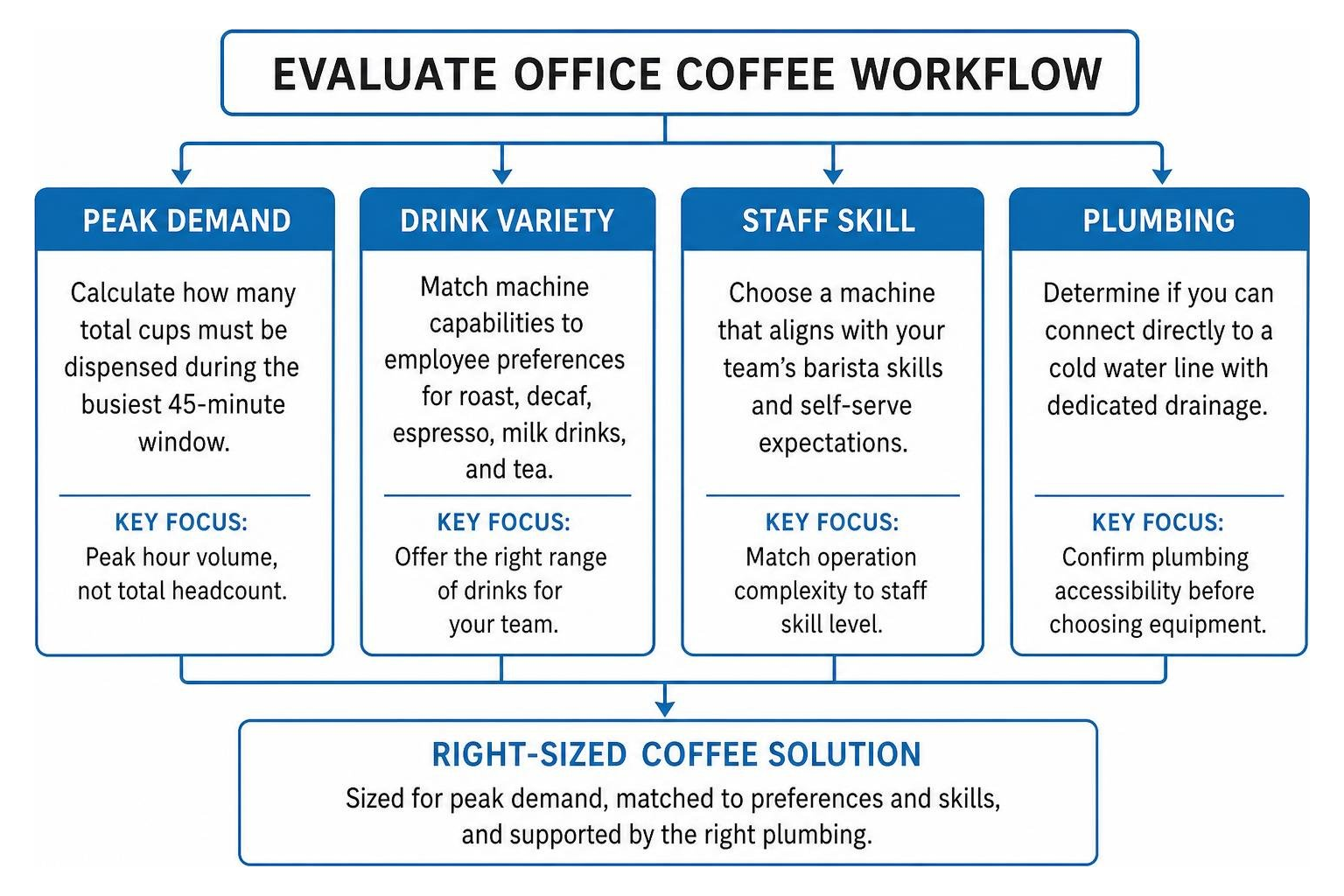
When evaluating your team’s needs, consider these core factors:
- Peak Hour Volume: Calculate how many total cups must be dispensed during the busiest 45-minute window.
- Plumbing Accessibility: Determine if you can connect directly to a cold water line with dedicated drainage.
- Counter Space and Clearance: Measure vertical clearance under cabinets for hopper and bean refills.
- Cleaning Responsibility: Choose a machine whose daily maintenance matches your office management resources.
| Office Size Category | Team Headcount | Recommended Machine Configuration | Daily Cup Expectation | Plumbing Recommendation |
|---|---|---|---|---|
| Small Office | Under 20 staff | Compact super-automatic or premium batch brewer | 15–35 cups/day | Pour-over reservoir or plumbed-in |
| Mid-Size Office | 20 to 60 staff | Commercial plumbed bean-to-cup system with auto-rinse | 40–120 cups/day | Dedicated direct water line & drain |
| Large Corporate | 60+ staff | Multiple super-automatic stations or multi-group batch drip | 150+ cups/day | Direct water line, filtration & floor drain |
Sizing Office Coffee Machines for Small, Mid-Size, and Enterprise Teams
For small offices with under 20 people, a compact super-automatic espresso machine or a prosumer brewer handles daily demand smoothly without requiring complex commercial plumbing.
In mid-size offices with 20 to 60 people, a commercial self-serve bean-to-cup machine connected to a direct water line is essential. Direct plumbing eliminates the constant chore of refilling water tanks, while large-capacity bean hoppers and internal waste bins keep operations running smoothly. Pairing your brewer with everything your office breakroom needs to stay caffeinated creates a self-sufficient refreshment station.
For enterprise spaces and corporate headquarters with 60 or more employees, deploying multiple beverage stations across different floors or wings prevents long lines. High-throughput commercial units with dual boilers and multi-group capabilities ensure continuous brewing during company-wide events.
Assessing Employee Skill Level and Drink Preferences
A machine that is too complex will quickly be abandoned or misused, leading to frequent service calls. Super-automatic touchscreens allow any employee or visiting client to brew a custom drink with zero training. If your team values simple black coffee, a commercial batch brewer is straightforward and dependable. If your workplace thrives on variety, one-touch bean-to-cup equipment provides lattes, mochas, and hot water for tea at the push of a button.
Key Features, Maintenance, and Budgeting for Commercial Breakrooms
Commercial office coffee equipment must withstand continuous daily use. Look for robust internal components, including stainless steel boilers, commercial brass group heads, and heavy-duty burrs. Machines equipped with heat exchangers or independent dual boilers allow simultaneous coffee brewing and milk steaming, which dramatically speeds up recovery time between drinks. Auto-volumetric dosing ensures that every cup pours to the exact ounce, preventing overflow messes on breakroom counters.
To ensure safety and compliance, commercial brewers must meet local environmental health and safety standards. Always refer to official commercial coffee machine safety guidance to ensure proper electrical loads, pressure vessel checks, and secure countertop positioning.

Installation, Water Lines, and Plumbing Requirements
Direct plumbed water lines eliminate manual reservoir refills and prevent airlocks in commercial pumps. Connecting directly to municipal water requires commercial-grade inline filtration. Quality water filters remove chlorine, sediment, and minerals that cause limescale buildup—the number-one cause of heating element failure in commercial brewers. Professional installation ensures balanced water pressure and leak-free drainage setups.
Equipment Budgeting: Purchasing, Leasing, and Renewed Machines
Budgeting for breakroom equipment involves comparing upfront capital investment against long-term operational costs. Weighing the pros and cons of renting or buying corporate coffee equipment helps you decide whether to purchase outright or partner with a full-service provider.
Flexible equipment financing and leasing programs allow businesses to access high-end bean-to-cup systems without large capital outlays. Another cost-effective option is certified renewed equipment. Renewed commercial espresso machines are inspected, rebuilt with factory parts, and pressure-tested to manufacturer standards, delivering commercial reliability at a substantial discount. Pairing your equipment with a managed commercial coffee delivery service guarantees a steady supply of freshly roasted beans, filters, and cleaning products without surprise administrative headaches.
Cleaning, Descaling, and Preventive Maintenance
Routine cleaning preserves beverage flavor and protects internal components. Modern super-automatic machines feature automated rinsing cycles that purge the brew group and milk lines after every drink.
Follow these standard maintenance steps:
- Daily Steps:
- Run the automated milk line wash cycle to clear dairy residue.
- Empty and rinse the grounds container and drip tray.
- Wipe down steam wands and dispensing spouts with a food-safe sanitizer.
- Weekly Steps:
- Insert commercial detergent cleaning tablets into the brew group cycle.
- Soak milk frother nozzles in specialized milk-dissolving solution.
- Clean and dry bean hoppers to remove residual coffee oils.
- Quarterly/Annual Steps:
- Replace inline water filtration cartridges.
- Run a full descaling cycle to remove mineral deposits from heating blocks.
- Inspect water intake gaskets and silicone seals.
Frequently Asked Questions About Office Coffee Machines
What is the most cost-effective coffee machine type for a mid-sized office?
For a mid-sized team (20 to 60 employees), a direct-plumbed super-automatic bean-to-cup system or commercial batch brewer offers the best per-cup economics. Buying whole-bean coffee in bulk significantly lowers ongoing expenses compared to single-serve pods, while automated self-cleaning features minimize staff maintenance time.
Do commercial espresso machines require dedicated water lines?
Most commercial espresso and bean-to-cup machines designed for mid-to-large offices perform best when plumbed directly into a cold water line. Direct lines maintain consistent water pressure for optimal espresso extraction and eliminate the need for employees to manually refill heavy water tanks throughout the day. Compact pour-over models with internal reservoirs are available for smaller spaces lacking nearby plumbing.
How do renewed or refurbished espresso machines compare to new commercial models?
Certified renewed commercial machines undergo thorough factory rebuilds, including boiler descaling, group head rebuilding, new solenoid valves, and updated firmware. When sourced through reputable equipment specialists, renewed machines provide the same commercial performance, daily cup capacity, and warranty coverage as brand-new units at 20% to 40% lower cost.
Conclusion
Upgrading your office coffee setup transforms the daily rhythm of your workplace. By trading inconsistent brews and offsite coffee runs for an intuitive, commercial-grade coffee station, you support employee focus, boost daily morale, and create a welcoming environment for visiting clients. Whether your team needs the sheer volume of a commercial drip brewer or the one-touch luxury of a specialty bean-to-cup machine, choosing equipment that matches your peak hourly demand ensures years of reliable service.
At SkyTop Vending, we have provided comprehensive breakroom solutions across the Las Vegas Valley since 1977. Our commitment to “Service the way YOU like it” is backed by our 99.4% client retention rate across Las Vegas and Southern Nevada. Explore our full range of commercial coffee machines for every office need and let our local team design, install, and maintain the perfect coffee solution for your workplace.