
A Faster, Fresher Breakroom Starts With a Micro Market
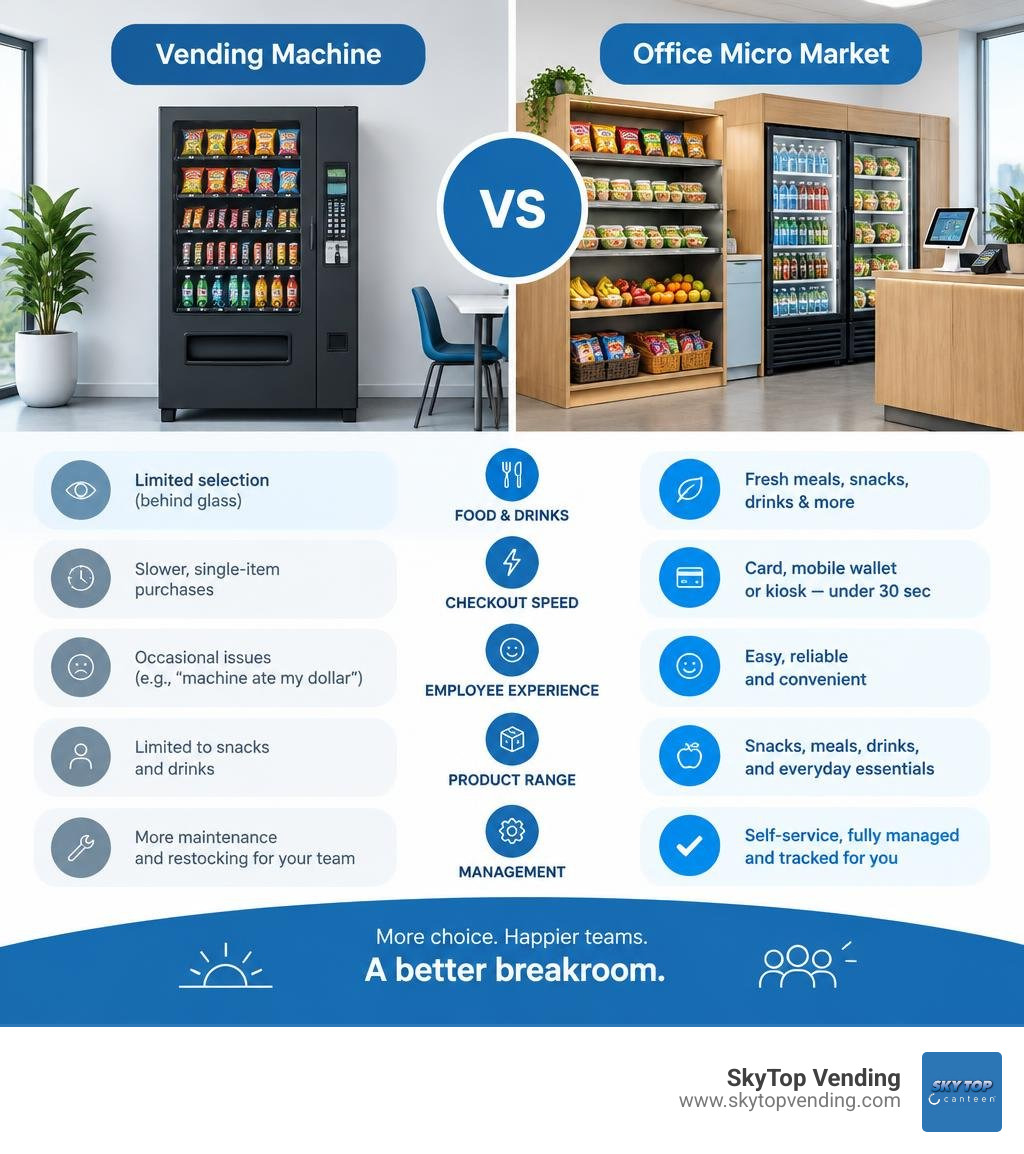
Micro markets for offices are self-service breakroom shops that give employees easy access to fresh meals, snacks, drinks, and everyday essentials. Instead of choosing from behind a vending-machine glass panel, employees can browse open shelves or smart coolers and check out with a card, mobile wallet, or self-service kiosk – often in under 30 seconds.
For a facility manager, the practical first step is simple:
- Confirm your on-site headcount, shifts, and available space.
- Choose a smart cooler for a compact area, an open market for roughly 150-250 square feet, or a hybrid setup.
- Partner with a provider that installs, stocks, services, and tracks the market for you.
These markets tend to work best for facilities with 50 or more employees, with 100-500 employees often being an ideal range. They can give day, night, and weekend teams reliable food access without adding breakroom work to your schedule – and without the classic “the machine ate my dollar” problem.
I’m Gil Lipkin, and this guide will help you evaluate the right office micro-market setup for your team and space.
Terms related to Micro markets for offices:
Why Micro Markets for Offices Are Replacing Traditional Vending
The standard breakroom model used to consist of two humming, metal boxes in a corner: one dispensing cans of soda and the other dropping bags of chips from metal coils. While traditional vending machines in Las Vegas have their place, modern workplaces operate differently today. Teams expect real nourishment, seamless technology, and healthy meal options throughout every shift.
Micro markets replace bulky, restrictive hardware with open-concept retail. By transforming dead breakroom space into an attractive convenience store, companies remove the friction of off-site lunch runs. Instead of leaving the building, waiting in drive-thru lines, and returning stressed, staff can choose from chef-prepared salads, yogurt parfaits, and cold-brew beverages in an instant.
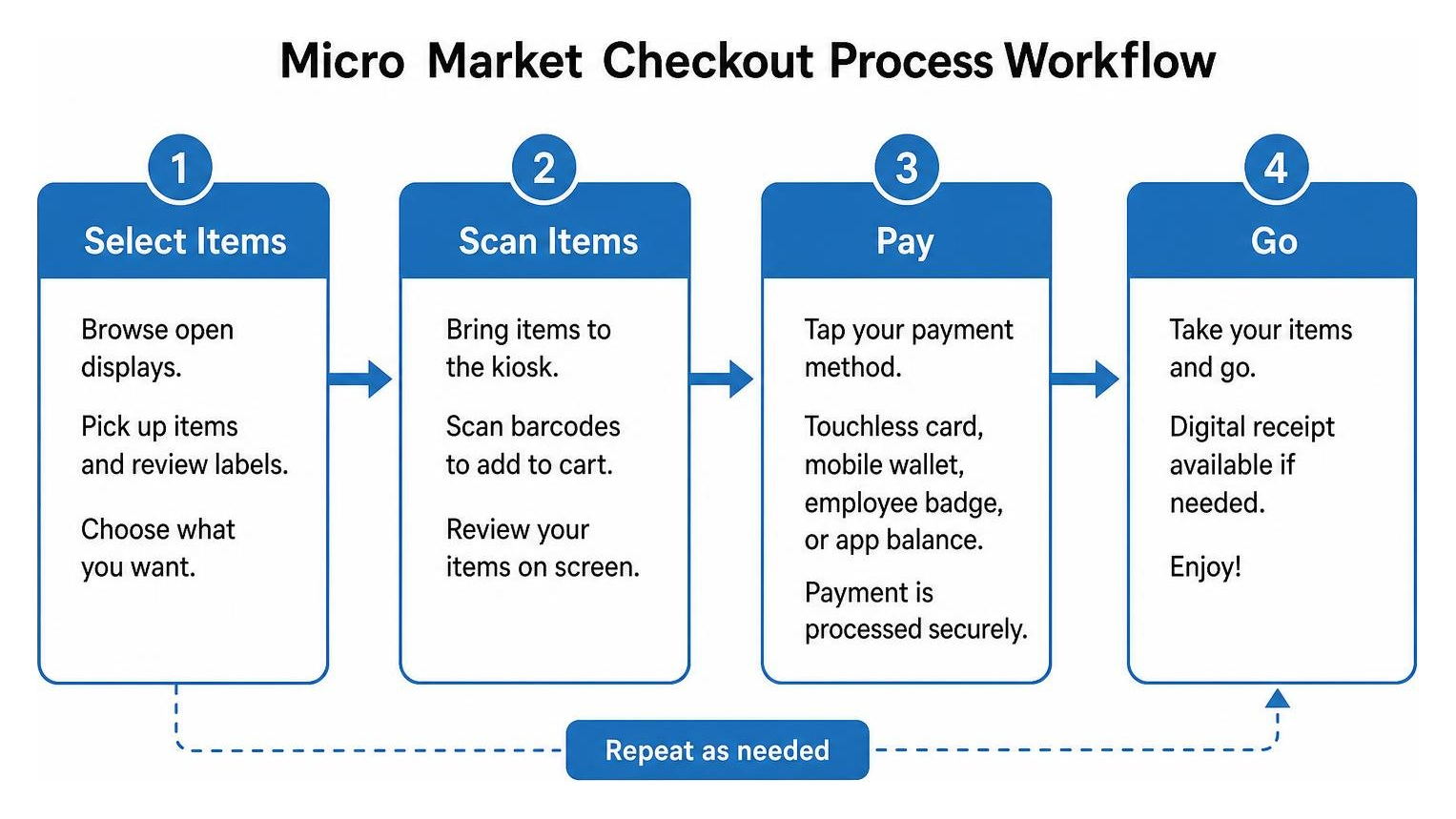
Technological advancements have accelerated this transition. Sub-30-second checkouts allow workers to scan items and pay using touchless cards, Apple Pay, Google Wallet, or dedicated mobile apps. The elimination of coin slots and jammed bill validators means zero lost quarters and virtually zero maintenance headaches for human resources or office managers. For facilities seeking healthier food on demand, exploring fresh food vending illustrates how automated retail has evolved beyond preserved snacks into nutritious daily dining.
| Feature | Traditional Vending | Modern Office Micro Market |
|---|---|---|
| Product Selection | 30–45 packaged SKUs | 150–300+ fresh meals, drinks, and snacks |
| User Experience | View behind glass; drop chute delivery | Touch, inspect nutritional labels, pick up directly |
| Payment Methods | Cash, coins, basic magnetic-stripe card | Touchless cards, Apple/Google Pay, employee badges, app balances |
| Average Checkout Time | 45–60 seconds per item | Under 30 seconds for multiple items |
| Fresh Meal Capacity | Very limited | High (salads, wraps, protein plates, entrees) |
| Footprint Flexibility | Fixed box dimensions | Modular fixtures, custom racks, smart coolers, open shelves |
| Maintenance Burden | Frequent mechanical coin/drop jams | Minimal; fully remote telemetry and software audits |
Open-Concept Displays and Fresh Food Selection
One major limitation of legacy vending is the inability to inspect a product before purchasing. Open-concept micro markets eliminate that barrier completely. Employees can pick up a bottle, read the ingredient list, check the calorie count, and verify allergy information before paying.
This open environment allows for a diverse product catalog that legacy machines cannot support. Employees gain access to:
- Handcrafted wraps, deli sandwiches, and bistro-style lunch boxes.
- Crisp seasonal salads, fresh fruit bowls, and vegetable snack packs.
- Protein-rich items like hard-boiled eggs, cheese crisps, and artisan jerky.
- Specialty diet options including gluten-free, vegan, keto, and low-sodium choices.
- Premium beverages ranging from prebiotic sodas and kombucha to cold-pressed juices.
Pairing open fresh-food displays with professional breakroom upkeep creates a welcoming corporate environment. By transforming your pantry with expert services, you ensure that shelves stay systematically organized, aesthetically appealing, and consistently rotated with products your team genuinely enjoys.
Cashless Kiosks and Unattended Retail Convenience
Modern micro markets function as mini unattended retail stores operating 24 hours a day, 7 days a week. At the center of the market is an intuitive, self-checkout kiosk equipped with high-speed barcode scanners and encrypted payment processors.
Employees simply grab their selections, bring them to the kiosk counter, scan the barcodes, and tap their payment method. Because payment is entirely digital, transaction queues move rapidly during peak morning and afternoon break times.
For facilities with tight corners where a full kiosk counter might not fit, smart coolers present an equally powerful option. These secure, tap-to-unlock units let users swipe a card to open the glass door, take what they want, and walk away—the system automatically tallies the items removed using sensors. Reviewing our insights on smart vending machine suppliers demonstrates how automated sensor retail delivers rapid convenience in any footprint.
Evaluating Breakroom Setups: Smart Coolers to Open Concepts
Every office has unique physical constraints, floor plans, and employee schedules. Designing an effective micro market requires matching the layout to your specific facility requirements.
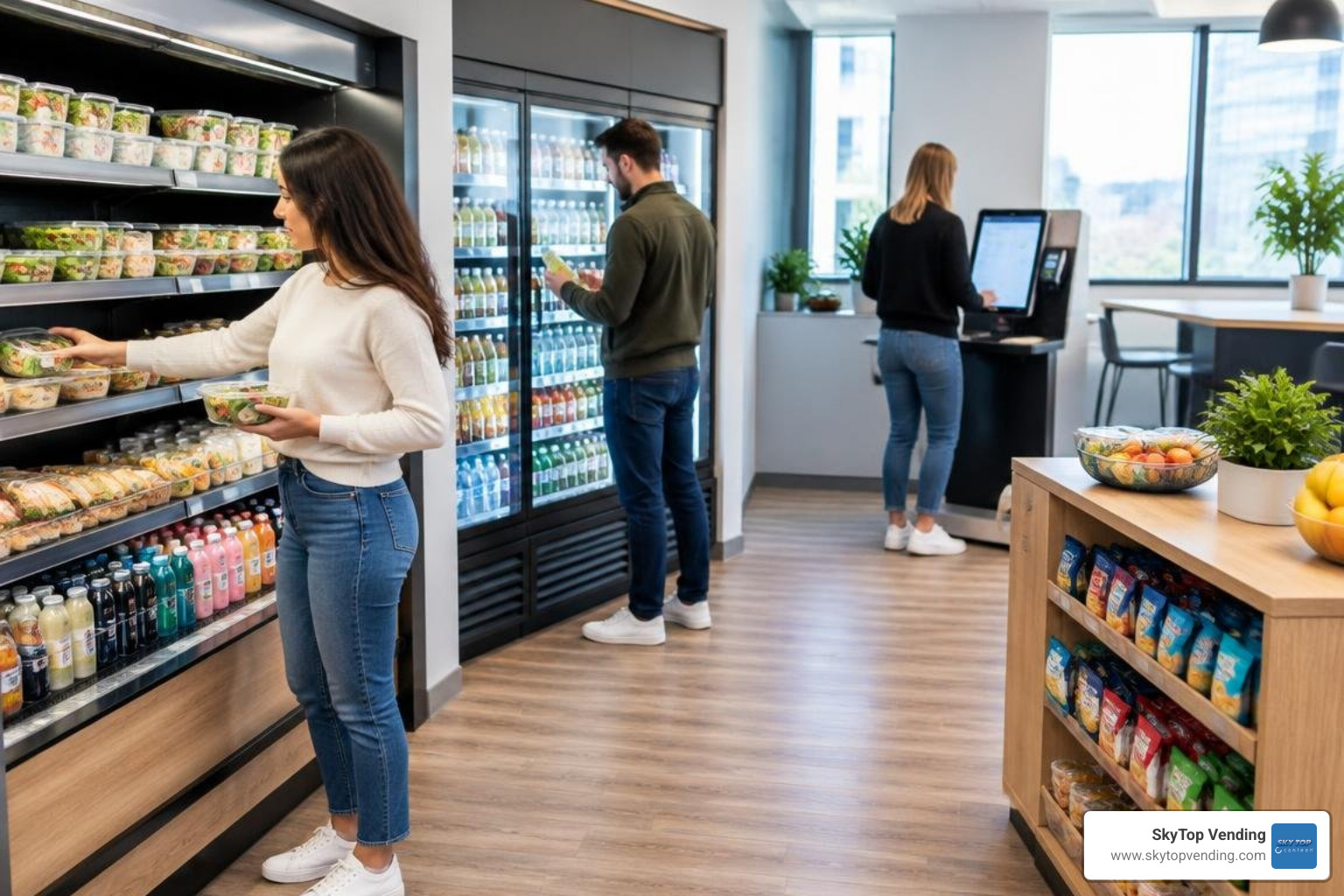
Choosing the Right Layout of Micro Markets for Offices
Workplace breakroom configurations generally fall into three structural categories:
- Smart Coolers (Compact Footprint): Designed to fit directly within standard vending footprints (roughly 10–25 sq ft). Users unlock the cooler using their credit card or company badge, pick out their fresh lunch or drink, and close the door. It charges them automatically based on the items removed.
- Open-Concept Markets (Full Experience): Utilizing roughly 150 to 250 square feet of floor space, open markets feature custom architectural slat walls, dry-good display shelving, reach-in commercial glass-door refrigerators, frozen treat freezers, and a standalone checkout kiosk.
- Hybrid Markets (Custom Combination): A blend of open ambient shelving alongside tap-to-access smart coolers for high-value items, offering maximum menu variety while balancing spatial efficiency.
Modular hardware can be configured around structural columns, awkward alcoves, or kitchen walls to maximize open floor space.
Space, Footprint, and Headcount Requirements
Determining the ideal breakroom setup comes down to two primary metrics: square footage and daily on-site headcount.
- 50 to 99 Employees: Smart coolers or compact hybrid setups work exceptionally well here. These systems keep inventory moving quickly enough to maintain fresh food quality without requiring a massive retail footprint.
- 100 to 500 Employees (The Sweet Spot): Full open-concept micro markets thrive in this range. Daily foot traffic supports a deep catalog of fresh perishable meals, diverse snacks, and multiple beverage coolers.
- 500+ Employees / Campus Facilities: Large corporate hubs, fulfillment centers, and multi-shift manufacturing plants often place full-scale open markets in central cafeterias and supplement them with satellite smart coolers in distant wings or secondary breakrooms.
Whether your building houses day-shift creative teams or round-the-clock shift workers in the Las Vegas Valley, tailoring the layout ensures constant food access without crowding your common areas.
Seamless Installation, Daily Stocking, and Operations
A common concern among office administrators is the operational lift required to maintain an on-site market. In reality, a turnkey breakroom provider manages the entire lifecycle—from design and delivery to merchandising, sanitation, and restocking.
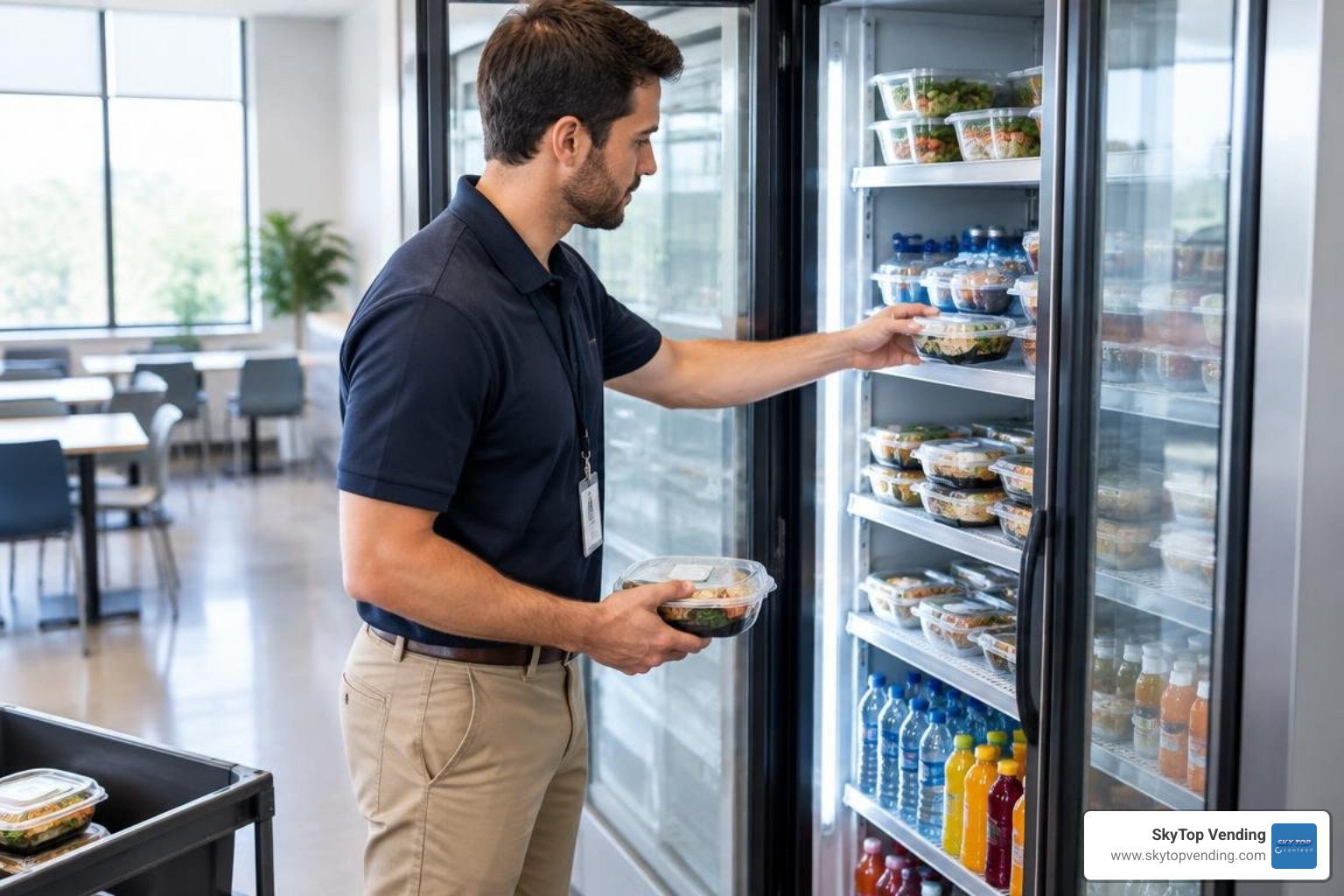
Turnkey Installation and Timeline
Setting up an office micro market requires zero heavy lifting from your internal facilities crew. Once a floor plan is approved, your provider coordinates delivery and setup around your operating hours to avoid business disruptions.
The installation timeline is remarkably fast:
- Smart Cooler Setups: Typically completed in 1 to 2 weeks from initial space assessment to first stock.
- Open-Concept and Hybrid Markets: Typically launched within 2 to 3 weeks, allowing time for custom fixture assembly, electrical connections, and internet network configuration.
Facilities simply need to supply standard 110V electrical outlets and a stable internet connection (hardwired Ethernet, dedicated Wi-Fi, or provider-supplied cellular routers). From there, your vendor builds the shelving, balances refrigeration units, tests the payment kiosks, and stocks the shelves. For an in-depth breakdown of installation protocols, our detailed guide to micro market services provides step-by-step clarity.
Security and Inventory Tracking in Micro Markets for Offices
Because open-concept markets operate on an unattended self-checkout system, business leaders frequently ask about shrinkage and loss prevention. Modern micro-market security operates on a multi-layered framework that keeps inventory discrepancies exceptionally low:
- High-Definition Video Auditing: Discrete, wide-angle security cameras monitor the shelving and checkout kiosk area. Video feeds sync directly with point-of-sale time stamps to verify scanning activity.
- Real-Time Telemetry: Advanced IoT inventory tracking records every sale instantly. Restocking routes are dynamically generated based on true consumption patterns, so technicians know exactly what sold before arriving on-site.
- Closed Office Communities: Because office breakrooms exist within secure commercial buildings accessible only by employees and badged guests, shrinkage rates consistently remain in the low single digits—well within normal retail operating margins.
By using automated sales tracking, your provider spots top-selling items immediately and replaces slow movers with fresh alternatives, ensuring shelves never sit empty with unwanted products.
Frequently Asked Questions About Workplace Micro Markets
What is the typical cost and minimum employee count for an office micro-market?
For qualifying facilities that meet minimum headcount requirements (typically 50+ on-site personnel), micro markets come with $0 equipment and installation costs to the employer.
The service provider finances the fixtures, commercial refrigeration, checkout kiosks, and security hardware, earning revenue directly through individual product sales made by employees. Employers can also choose subsidized or “free-vend” configurations, where the company covers a percentage of employee purchases as a workplace benefit.
How does loss prevention work in self-service breakroom markets?
Loss prevention relies on a combination of access control, visible point-of-sale monitoring, and high-definition video surveillance.
Checkout kiosks prominently feature digital transaction confirmations and overhead display mirrors or cameras, reminding users that the market is actively monitored. When combined with real-time inventory reconciliation, discrepancies are identified and resolved promptly. In typical office environments, loss rates consistently match or beat standard retail averages.
What food and beverage items can be stocked in our micro-market?
Workplace micro markets support hundreds of product configurations tailored to your staff’s preferences. A standard inventory rotation includes:
- Fresh Foods: Gourmet sandwiches, wraps, artisan salads, sushi rolls, breakfast burritos, and hard-boiled egg packs.
- Healthy Snacks: High-protein bars, trail mixes, dried fruit, raw nuts, hummus with pretzels, and roasted chickpeas.
- Everyday Favorites: Classic chips, pretzels, chocolates, pastries, and baked goods.
- Cold Beverages: Sparkling water, cold-brew coffee, iced teas, energy drinks, protein shakes, and zero-sugar sodas.
To discover how specialized meal rotations and beverage setups elevate employee morale, explore our comprehensive breakroom solutions to review the full spectrum of available office refreshments.
Conclusion
Upgrading your breakroom from outdated vending machines to a vibrant office micro market transforms your workspace culture. It gives employees quick access to healthy, energizing food, saves them time during short breaks, and fosters natural collaboration in a modern, welcoming environment.
At SkyTop Vending, we believe in delivering “Service the way YOU like it.” Serving businesses across Las Vegas and the entire Las Vegas Valley since 1977, our 99.4% client retention rate reflects our dedication to seamless breakroom management, dependable stocking, and responsive service.
Ready to see what a customized micro market looks like in your facility? Pair your fresh food market with our tailored office coffee and beverage programs to create a complete, all-in-one refreshment destination for your team. Contact us today to schedule a site evaluation and explore your breakroom options.