
Smart Vending Machines Are Reshaping How Businesses Feed and Serve People
Smart vending machines are internet-connected, AI-powered retail units that let customers pay cashlessly, grab products, and go — while giving operators real-time inventory data, remote management, and automated alerts from anywhere.
Here’s what you need to know at a glance:
- What they are: Vending machines with IoT connectivity, AI product recognition, and cloud-based management software
- How they work: Customers tap a card or phone, select items, and the machine handles payment and tracking automatically
- Key benefits for operators: Real-time inventory visibility, fewer wasted service trips, remote diagnostics, and lower downtime
- Key benefits for customers: Cashless payments, 24/7 access, wider product selection, and fast frictionless checkout
- Cost range: Hardware typically runs $3,000–$7,000, plus monthly software subscriptions and payment processing fees
- Market size: The global smart vending market was valued at $8.54 billion in 2023 and is projected to reach $32.30 billion by 2032
If you manage a facility or run a business, keeping employees and guests fed, hydrated, and happy is a real operational challenge. Break room logistics take time. Restocking trips are expensive. Old-school machines jam, run out of stock without warning, and still expect exact change in 2026.
That’s exactly the problem smart vending solves.
This guide covers every major smart vending supplier, solution type, and cost consideration — so you can make a confident decision for your location.
What Defines Smart Vending Machines in 2026?
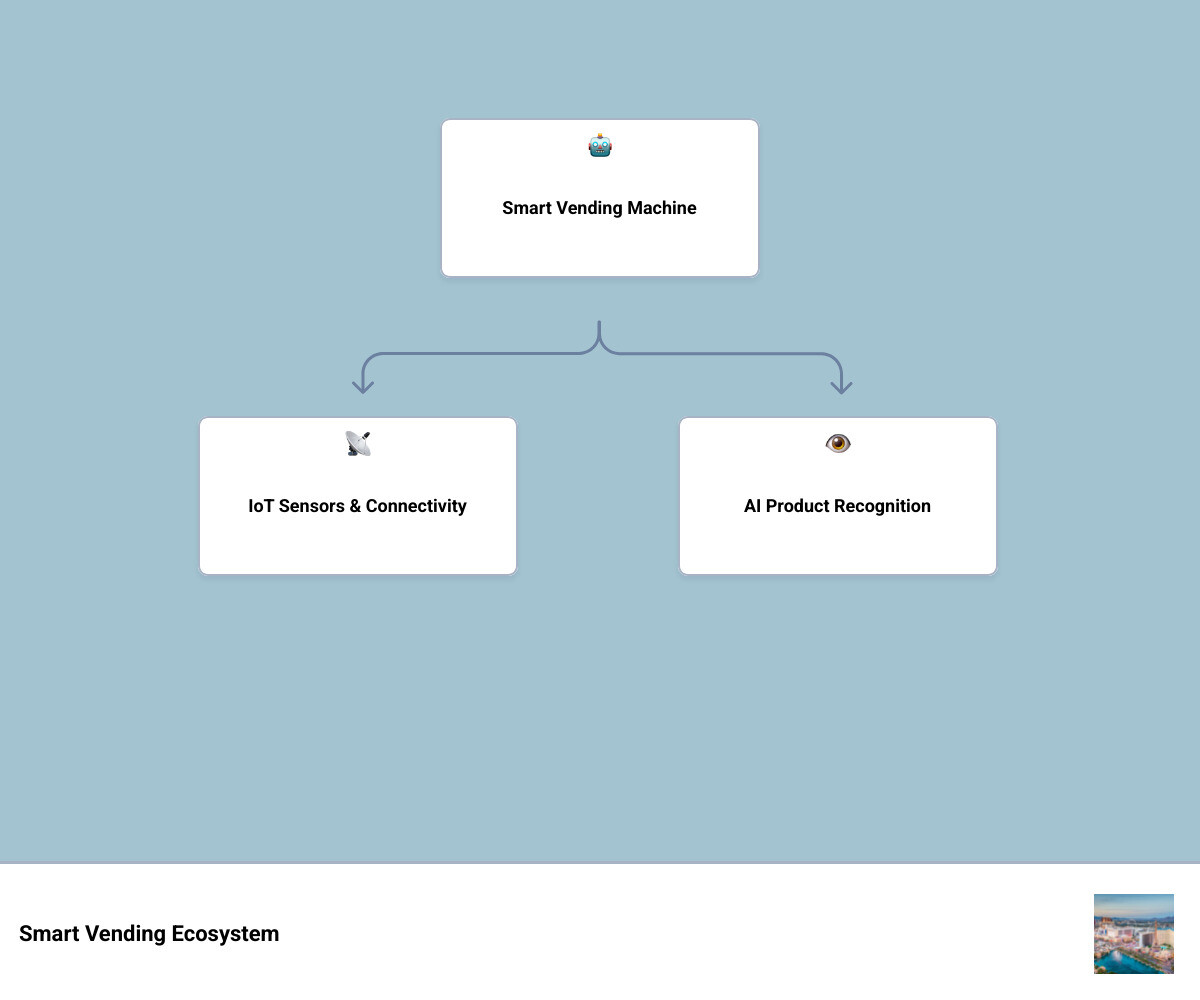
As we move through 2026, the definition of a “vending machine” has evolved far beyond a metal box that spits out a bag of chips after you kick it. Today, smart vending machines are essentially autonomous retail hubs. They are defined by their ability to “think” and “communicate” via the Internet of Things (IoT).
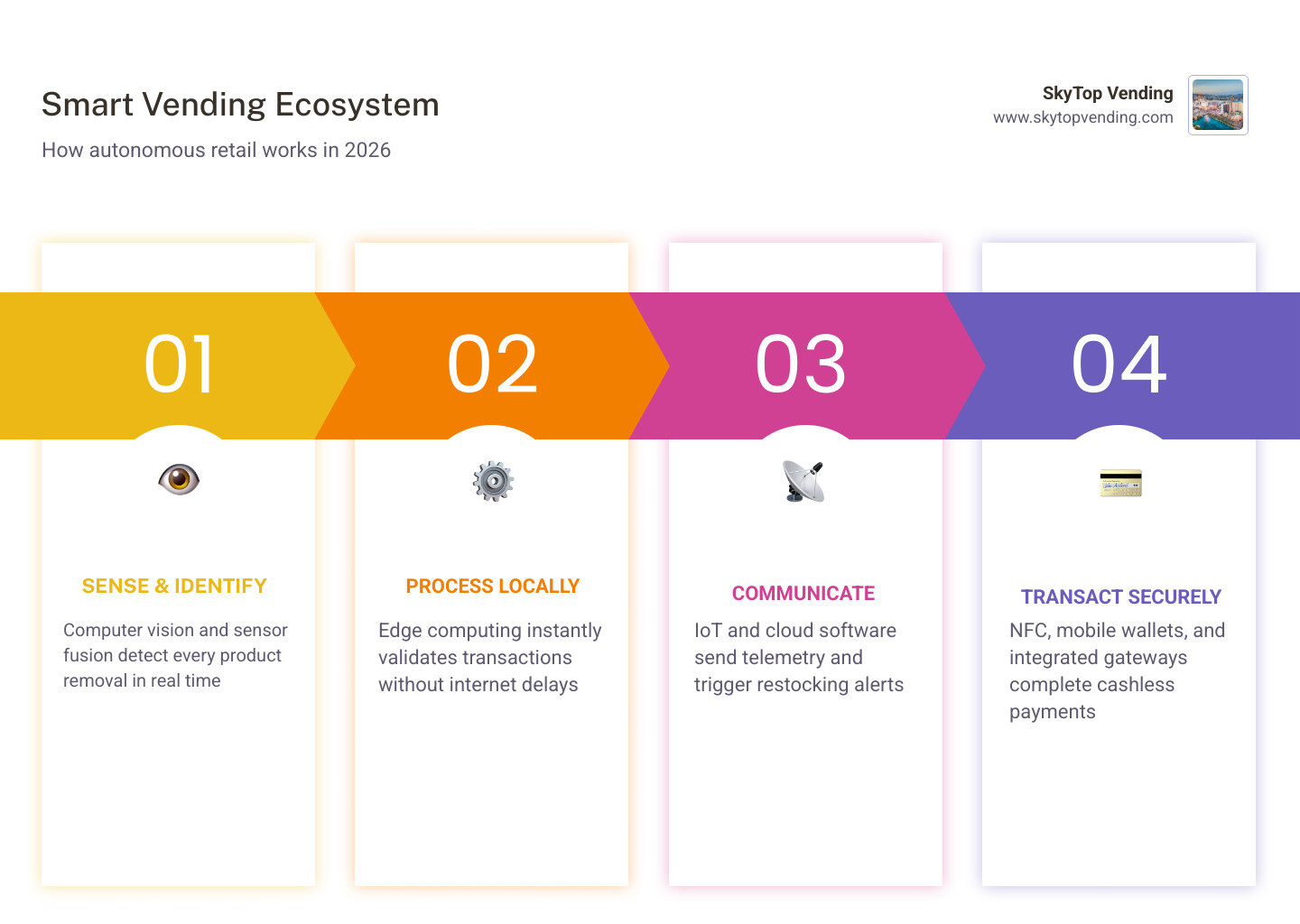
At their core, these machines use IoT sensors and cloud-based software to stay in constant contact with us. This means we don’t have to guess if a machine in a North Las Vegas warehouse is low on water or if a cooler in a Summerlin office lobby has a compressor issue. The machine tells us itself through real-time telemetry.
This isn’t just about fancy screens; it’s about operational logic. As we explain in No Magic, Just Logic: How Smart Vending Machines Work, the “smart” aspect comes from the seamless integration of hardware and digital interfaces. This 24/7 connectivity allows for automated inventory tracking, meaning the moment a customer grabs a protein shake, the digital manifest is updated.
The Core Technology Behind Smart Vending Machines
The “brains” of these units rely on several layers of sophisticated tech:
- Computer Vision: High-definition cameras that use AI to identify exactly which product was removed from a shelf.
- Sensor Fusion: A combination of weight sensors and infrared beams that work alongside cameras to verify transactions.
- Edge Computing: Processing data locally on the machine to ensure lightning-fast response times for the customer.
- NFC & Integrated Payment Gateways: Supporting everything from Apple Pay and Google Pay to encrypted credit card swipes.
- High-Definition Touchscreens: Large displays (often 21.5 to 30 inches) that act as both a point-of-sale and a digital advertising platform.
How Smart Vending Differs from Traditional Units
The difference between a traditional machine and a smart one is like comparing a rotary phone to a smartphone. Traditional units are often “blind” and “deaf”—they don’t know they are empty until a driver shows up, and they don’t know they are broken until a frustrated customer calls a 1-800 number.
Smart vending machines provide a level of visibility that ensures you are providing Vending Machines That Won’t Make You Regret Your Life Choices. By using automated restocking alerts, we can optimize routes and ensure that popular items are never out of stock.
| Feature | Traditional Vending | Smart Vending (2026) |
|---|---|---|
| Payment | Cash/Coin dominant | Cashless/Mobile default |
| Inventory | Manual check required | Real-time digital tracking |
| Maintenance | Reactive (fix when broken) | Proactive (remote diagnostics) |
| Product Range | Limited to coils/slots | Flexible (fresh food, electronics) |
| User Experience | Button-based, mechanical | Touchscreen, “Grab and Go” |
Types of Autonomous Retail and Smart Vending Solutions
In the Las Vegas Valley, we see a wide variety of environments, from high-traffic gym floors to quiet corporate offices. Thankfully, there isn’t just one type of smart machine.
AI Smart Coolers and Grab-and-Go Fridges
These are the “gold standard” for fresh food and premium beverages. They look like high-end glass-front refrigerators but are locked. A customer taps their card, the door unlocks, they grab what they want, and as soon as the door closes, the AI vision system calculates the total and charges them. These often feature dual-climate zones, allowing for both ambient snacks (like chips) and refrigerated meals in a single footprint.
Ambient Snack Cabinets
For non-refrigerated items, these cabinets offer the security of a vending machine with the flexibility of a grocery store shelf. Because they don’t use coils or motors, they can hold fragile items or irregularly shaped packages that would normally get stuck in a traditional machine. If you are looking for a smaller footprint, you might even consider Your Next Big Investment: Countertop Vending Machines for Sale.
Micro-Markets
A micro-market is essentially a small, unattended convenience store. While it uses the same backend technology as smart vending machines, it is an open-concept layout. Customers scan items at a central kiosk or via a mobile app. This is perfect for secure office environments where you want to offer hundreds of product SKUs.
Enhancing Customer Experience with Smart Vending Machines
The modern consumer in Nevada expects speed. Smart machines deliver a frictionless checkout that feels like magic. Statistics show that smart stores report an average of 1.9 items per transaction—significantly higher than traditional machines—because the “grab and go” nature encourages multi-item purchases.
When you provide Vending Machines in Las Vegas that feature mobile wallet integration and personalized promotions, customer satisfaction skyrockets. With 99.9% uptime and 99.9% transaction success rates, the “out of order” sign is becoming a relic of the past.
Operational Efficiency for Modern Operators
For us at SkyTop Vending, the real beauty of this technology is the efficiency. We can reduce wasted service trips by seeing exactly what needs to be filled before a truck ever leaves our warehouse.
Some smart systems allow for an 80% reduction in on-site visits through remote rebooting and diagnostics. If a machine has a software glitch, we can often fix it from our office in Las Vegas without having to fight Strip traffic. This translates to lower downtime and more consistent service for you. You shouldn’t have to Don’t Gamble on Snacks with These Tabletop Vending Machines Las Vegas Services when you have data-driven demand forecasting at your fingertips.
Implementation Costs and Planning Your Upgrade
Upgrading to a smart fleet is an investment in the future of your breakroom. While the benefits are clear, the costs involve more than just the sticker price of the machine.
- Hardware Pricing: Depending on the size and technology (AI vision vs. standard telemetry), a new smart cooler or cabinet typically costs between $3,000 and $7,000.
- Mandatory Subscriptions: Most smart platforms require a monthly cloud fee (ranging from $30 to $175 per month) to cover the AI processing, cellular data, and remote management dashboard.
- Payment Processing Fees: Expect to pay standard transaction fees, usually ranging from 5% to 7% per transaction, which covers the secure processing of credit cards and mobile wallets.
- Connectivity: You will need a reliable signal. Most modern machines come with built-in cellular routers that automatically find the strongest local carrier (Verizon, AT&T, etc.).
Steps for a Successful Upgrade:
- Step 1: Payments First. Ensure your current machines at least have cashless readers.
- Step 2: Telemetry Second. Connect your machines to a Vending Management System (VMS) for inventory visibility.
- Step 3: AI Last. Once you have consistent data and high-traffic locations, move to AI-powered “Grab and Go” coolers for the ultimate experience.
Frequently Asked Questions about Smart Vending
How accurate is AI product recognition in 2026?
AI recognition has reached incredible heights. Leading systems now boast 99% to 99.5% accuracy. These systems use computer vision to “see” the product as it leaves the shelf. If the AI is unsure (for example, if a customer picks up an item and puts it back in the wrong spot), many systems use a “human-in-the-loop” review where a remote auditor verifies the video evidence. This ensures automatic charge adjustments are fair and accurate, providing clear video evidence for any dispute resolution.
What happens if the machine loses internet or power?
Smart machines are designed with “fail-secure” protocols. If the power goes out, the smart locks remain engaged to protect the inventory. In the event of an internet drop, many machines use offline data caching. They can store transaction data locally and then upload it to the cloud for processing as soon as the connection is restored. Most units also feature cellular backup to ensure they stay online even if the building’s Wi-Fi fluctuates.
Are smart vending machines secure against theft and shrinkage?
Actually, they are often more secure than traditional vending. Because a customer must pre-authorize their payment (tap their card or phone) before the door even opens, the machine knows exactly who is shopping. AI camera tracking monitors every movement inside the cabinet. If someone tries to tamper with the hardware or obstruct a camera, the system triggers real-time alerts to the operator. This has caused shrinkage to “all but disappear” in many unattended retail environments.
Conclusion
The transition to smart vending machines isn’t just a trend; it’s a fundamental shift in how we provide convenience. Whether you are looking to boost employee morale in a Las Vegas office or provide 24/7 fresh food in a local healthcare facility, the data-driven approach of smart vending ensures a better experience for everyone.
At SkyTop Vending, we’ve been serving the Las Vegas Valley since 1977. We understand the local landscape, and our 99.4% client retention rate is a testament to our commitment to “Service the way YOU like it.” We combine the latest in AI and IoT technology with the old-school reliability that Nevada businesses have trusted for decades.
Ready to see how smart vending can transform your space? Let us help you design a solution that works for your team.

For more information on how to upgrade your refreshment services, visit us at https://www.skytopvending.com/.