
What Are Micro Market Services? (Quick Answer)
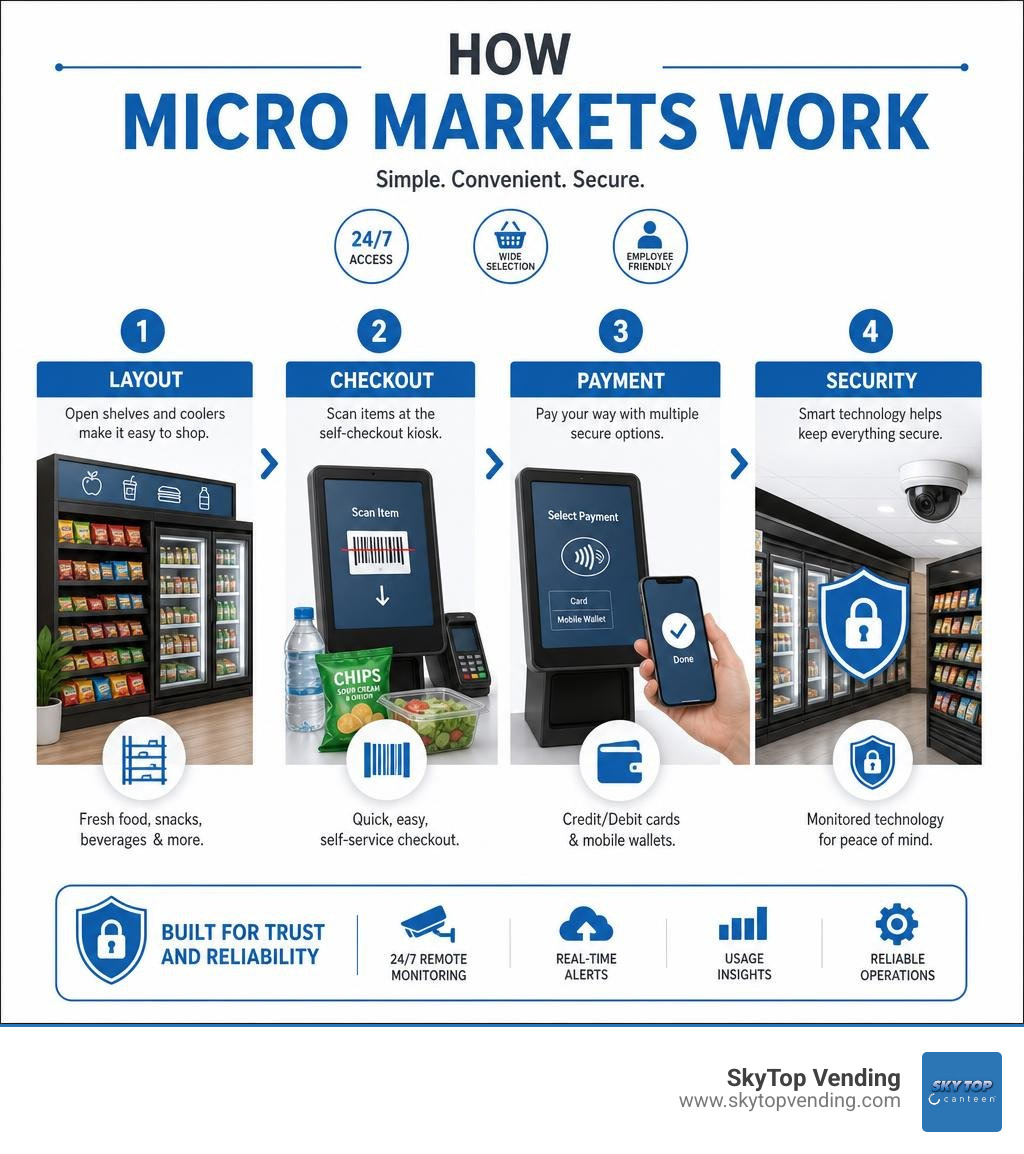
Micro market services provide self-service, unattended retail spaces installed inside workplaces — giving employees 24/7 access to fresh food, snacks, and beverages through open shelving, glass-front coolers, and a self-checkout kiosk.
Here’s what you need to know at a glance:
- What it is: A mini convenience store built into your breakroom — no staff needed
- How it works: Employees browse open shelves and coolers, then pay at a self-checkout kiosk using a card or mobile wallet
- Who it’s for: Workplaces with 50+ employees looking to upgrade their breakroom experience
- Cost: Little to no upfront cost in qualified locations; revenue comes from employee product purchases
- Key benefit: More variety, fresher food, and a better employee experience than traditional vending machines
If you’ve ever walked past a breakroom full of dusty vending machines and thought “there has to be a better way” — you’re right. Micro markets have quietly become one of the most impactful workplace upgrades available to facility managers and business owners today.
Unlike vending machines, a micro market feels like a real store. Employees can pick up a fresh salad, grab a coffee, and pay with their phone — all without leaving the building. It’s a small change with a big impact on morale, productivity, and retention.
This guide covers everything you need to know: how micro markets work, what they cost, how they’re managed, and how to decide if one is right for your workplace.
Understanding Micro Market Services: The Modern Breakroom Evolution
The traditional office breakroom is undergoing a massive shift. For decades, the standard setup consisted of a noisy vending machine that occasionally swallowed coins, a basic drip coffee pot, and a counter cluttered with mismatched sugar packets. Today, modern workplaces are replacing these relics with integrated micro market services.
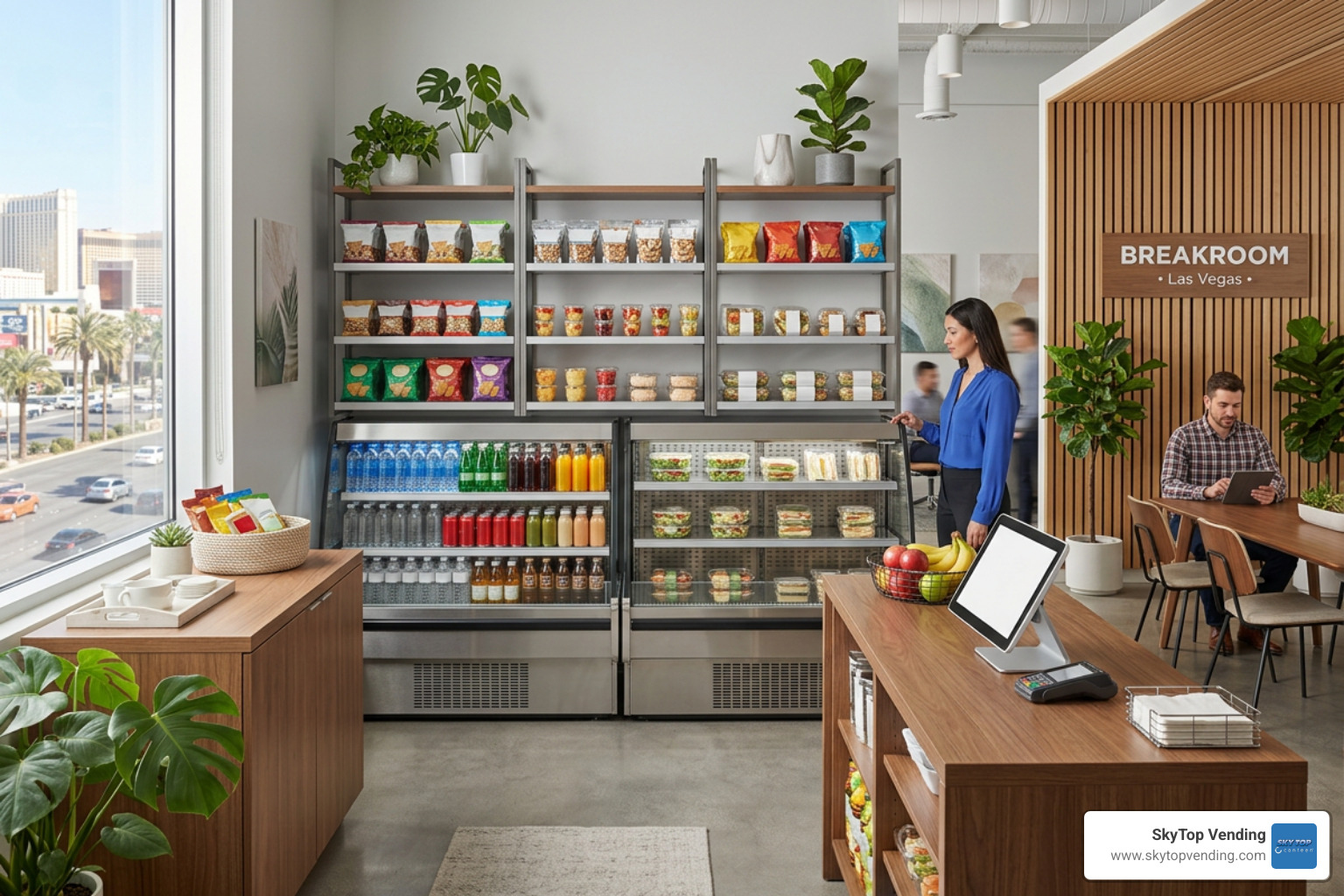
At its core, a micro market is an open-concept, self-service convenience store built directly into your office or facility. Instead of hiding products behind a glass pane and requiring a spiral coil to drop them down, a micro market utilizes open shelving, elegant countertop displays, and glass-front coolers. Employees can physically pick up a product, read the nutrition label, check the ingredients, and make an informed decision before purchasing.
This layout entirely redefines how employees interact with their breakroom. By removing physical barriers, we create an inviting retail environment that mimics a high-end neighborhood market. It transforms the breakroom from a place where people quickly grab a soda and leave into a social hub where team members can gather, collaborate, and recharge.
How Checkout, Payments, and Security Work
Because micro markets are completely unattended, they rely on robust, user-friendly technology to ensure transactions are seamless and secure.
The checkout process is incredibly straightforward:
- Grab: The employee walks up to the open shelves or coolers and selects their food, beverage, or snack.
- Scan: They bring their items to the central self-checkout kiosk and scan the barcodes.
- Pay: They complete the transaction using cashless payments, credit/debit cards, or mobile wallets like Apple Pay and Google Pay. Many systems also allow employees to set up a personal market account, which they can fund online or at the kiosk using cash or a linked card.
Security in an open retail environment is a common question for business owners. To prevent shrinkage and ensure a safe shopping experience, modern micro markets utilize a multi-layered security approach:
- CCTV Surveillance: High-definition security cameras monitor the market area 24/7. These cameras are highly visible, which naturally deters theft.
- Transaction Tracking: Every purchase is logged digitally. If an item is removed from a shelf but no transaction is recorded, smart inventory tracking flags the discrepancy.
- Smart Locks: For refrigerated and frozen sections, smart lock technology is utilized. In the event of a power outage or if a cooler’s temperature rises above safe FDA limits, the smart locks automatically lock the doors to prevent employees from purchasing spoiled food.
Micro Markets vs. Traditional Vending Machines
When comparing micro markets to traditional vending machines, the differences in product variety, user experience, and overall transaction value are stark.
Vending machines are structurally limited. They can only hold packaged, shelf-stable items that fit within their restrictive physical slots. If a vending machine jams, a product gets stuck, or the coin mechanism freezes, it creates immediate frustration and requires an on-site service call.
Micro markets, on the other hand, eliminate mechanical failures. Because there are no coils or drop mechanisms, there is virtually no equipment downtime. Furthermore, they allow for a significantly higher average transaction value because they can stock premium, fresh meals and higher-end beverages.
| Feature | Traditional Vending Machines | Modern Micro Markets |
|---|---|---|
| Product Variety | Limited to packaged snacks and canned/bottled drinks | Fresh food, salads, wraps, hot meals, premium snacks, and OTC essentials |
| Payment Options | Cash, coins, occasionally basic card readers | Cashless payments, mobile wallets, debit/credit cards, and personal market accounts |
| Shopping Experience | Transactional, restricted behind glass | Open-concept, tactile, browse-before-you-buy |
| Fresh Food Capability | Extremely rare and difficult to maintain | Outstanding; glass-front coolers with smart temperature locks |
| Maintenance & Jams | Frequent mechanical issues, coils jamming | No moving parts; virtually zero mechanical downtime |
Key Benefits of Micro Markets for Employers and Employees
Implementing a micro market in your facility yields immediate dividends for both your team and your bottom line.
For employees, the primary benefit is unparalleled convenience. Instead of rushing out of the building, fighting Las Vegas Valley traffic, and waiting in long fast-food lines during a short lunch break, they can access fresh, healthy meals on-site 24/7. This is particularly beneficial for workplaces with late-night shifts, healthcare facilities, or warehouses where off-site dining options are far away.
Additionally, micro markets directly support workplace wellness initiatives. By stocking a wide range of fresh salads, protein-packed wraps, fresh fruit, and dietary-specific options (such as gluten-free, vegan, or low-sodium snacks), you make it easy for your team to make positive food choices.
For employers, providing these high-quality refreshment services is a powerful tool for talent recruitment and retention. It shows your team that you care about their well-being and daily convenience, transforming your breakroom into The Secret Sauce for Happy Teams.

Customization and Subsidized Micro Market Services
One of the greatest strengths of modern micro market services is their flexibility. As an employer, you do not have to settle for a one-size-fits-all model. You can completely customize the layout, branding, and product mix to match your company culture and office aesthetic.
Furthermore, you can choose to implement a subsidized micro market. In this model, the employer funds a portion of the product costs to offer deep discounts to employees. For example, you might choose to:
- Subsidize healthy snacks by 50% to encourage wellness.
- Provide free beverages or fresh fruit on Fridays.
- Add monetary credit directly to your employees’ market accounts as a reward for hitting performance milestones or celebrating company anniversaries.
These hybrid solutions allow you to leverage your breakroom as a direct employee benefit, bridging the gap between a standard retail market and a fully free corporate pantry.
Ideal Workplace Size and Space Requirements
While micro markets are incredibly versatile, they do require a certain baseline of employees and physical space to operate efficiently.
- Employee Count: To justify the installation of a fully managed micro market, a workplace typically needs a minimum of 50 to 75 employees. Optimal performance and the widest variety of fresh food selections generally begin at 100+ employees.
- Space and Utilities: A standard micro market layout requires a dedicated breakroom area (ideally at least 15 square meters for a full-scale market, though compact smart fridge designs can fit in spaces as small as 7 square feet). It also requires standard 15-20 amp power outlets and a reliable internet connection (wired or cellular) for the self-checkout kiosk and security cameras.
Ideal workplace settings for micro markets include:
- Large corporate offices and call centers
- Warehouses, logistics hubs, and distribution centers
- Healthcare facilities, clinics, and hospitals
- Manufacturing plants and industrial parks
- Multi-tenant office campuses
Technology, Equipment, and Product Offerings
The backbone of a modern micro market is its integrated retail infrastructure. This isn’t just a collection of shelves; it is a highly sophisticated, data-driven system.
The hardware includes state-of-the-art smart kiosks with touchscreen interfaces, high-definition security cameras, and energy-efficient LED-lit coolers. On the software side, real-time inventory tracking and AI-driven data intelligence monitor every single transaction. This allows us to see exactly which items are popular, which days see the highest traffic, and when specific products need to be replenished.
Because of this advanced technology, the product offerings go far beyond standard vending fare. A typical micro market can stock hundreds of items, including:
- Fresh Meals: Sandwiches, wraps, salads, burritos, and heat-and-eat entrees.
- Beverages: Craft sodas, energy drinks, sparkling waters, cold brew coffee, and kombucha.
- Snacks: High-protein bars, nuts, chips, gourmet chocolates, and yogurt.
- Over-the-Counter (OTC) Essentials: Pain relievers, allergy medicine, eye drops, and mints.
Comparing Micro Markets and Office Pantry Services
While both micro markets and office pantry services elevate the workplace experience, they operate on completely different financial and operational models.
An office pantry service is a fully employer-funded program. The company pays a monthly fee—typically ranging from $15 to $50 per employee per month—to stock free snacks, drinks, and meals for their team. There is no checkout kiosk and no transactional cost for the employee; it is entirely a workplace perk. To understand how to manage this type of setup, you can read about Beyond the Breakroom: Elevating Your Office with a Top-Tier Pantry Service or explore The Art of Order: Transforming Your Pantry with Expert Services.
A micro market, by contrast, is a self-checkout retail store. Employees pay for their own purchases, meaning it operates at little to no ongoing cost to the employer. For businesses that want to provide high-quality food options but don’t have the budget to fully fund a free pantry, a micro market is the perfect middle ground.
Integrating Coffee and Beverage Solutions
To truly complete your breakroom transformation, your micro market should be paired with a premium office coffee service. When integrated directly into the market layout, your coffee station shifts from a simple countertop brewer to a 24/7 workplace hospitality hub.
A complete beverage program can include bean-to-cup espresso machines, single-cup brewers, and bottleless water coolers. By running your coffee service through the micro market’s unified payment infrastructure, employees can scan and pay for their specialty lattes, fresh-ground coffee, or iced beverages right alongside their breakfast wrap or afternoon snack.
For a deeper dive into designing the ultimate breakroom, check out our Ultimate Guide to Breakroom Solutions.
Operational Management, Costs, and Compliance
One of the most appealing aspects of partnering with a professional provider for your micro market is the cost structure. In qualified locations with a sufficient employee count and space, there is most often little to no upfront cost for the installation and setup of the equipment. The provider handles the design, delivery, installation, and ongoing maintenance, recouping their investment through the retail sales of the products.
Best Practices for Inventory and Restocking
To keep a micro market running smoothly, inventory management must be proactive and data-driven. We don’t rely on guesswork or static delivery schedules.
By utilizing dynamic restocking and real-time inventory intelligence, we monitor product depletion rates remotely. This ensures that:
- Popular items are restocked before they sell out.
- Product assortments are adjusted dynamically based on seasonal preferences (e.g., more cold brew and iced teas during hot Las Vegas summers).
- Fresh food is rotated constantly to guarantee maximum freshness and eliminate waste.
- Slow-moving items are replaced with exciting new alternatives to keep the selection fresh and engaging.
Regulatory Compliance and FDA Standards for Micro Market Services
Operating an unattended food establishment comes with strict regulatory responsibilities. Because there is no cashier on-site to monitor food safety, micro markets must follow applicable local health regulations and align with recognized food safety guidance, including the FDA Food Code and standards for unattended food establishments.
The primary compliance requirement involves temperature control. If a refrigeration unit loses power or fails to maintain safe temperatures (below 41°F for coolers and 0°F for freezers), the system must have an automatic smart lock mechanism that physically prevents consumers from opening the door and purchasing potentially compromised food.
Additionally, micro markets must display clear contact information for customer service, provide easily accessible ingredient and allergen information, and maintain strict sanitation standards during restocking and cleaning visits.
Frequently Asked Questions about Micro Markets
How much does it cost to install and operate a micro market?
For qualified locations in the Las Vegas Valley with sufficient employee traffic (typically 50-75+ employees), there is zero upfront cost for equipment, installation, or setup. The provider installs and fully manages the market, earning revenue directly from product purchases. If an employer chooses to subsidize products or add premium coffee services, those monthly programmatic fees are billed separately.
How do micro markets prevent theft and shrinkage?
Micro markets maintain remarkably low shrinkage rates (often under 2%) through a combination of high-definition security cameras, highly visible signage, transaction tracking, and closed-network checkout systems. Because the market is located within a secure, private workplace rather than a public space, employee accountability naturally deters theft.
How long does the installation process typically take?
Once the initial space consultation is complete and the custom layout and product mix are approved, the rapid deployment and installation process typically takes 3 to 4 weeks. This includes setting up the cabinetry, running power and internet lines, installing the smart kiosks and coolers, and stocking the initial inventory.
Conclusion
Upgrading your breakroom with modern micro market services is one of the easiest and most effective ways to boost employee satisfaction, foster workplace collaboration, and support daily wellness. By replacing outdated vending machines with an elegant, open-concept retail market, you give your team the premium convenience they deserve.
At SkyTop Vending, we have been proud to serve the Las Vegas Valley since 1977. Our commitment to “Service the way YOU like it” is backed by an industry-leading 99.4% client retention rate. We handle every step of the process—from custom design and seamless installation to proactive restocking and 24/7 technical support.
Ready to elevate your workplace breakroom? Explore our options for Micro Markets in Las Vegas and let us design the perfect refreshment solution for your team today!