
Choose Coffee Cups Supplies That Fit Every Drink and Service Setting
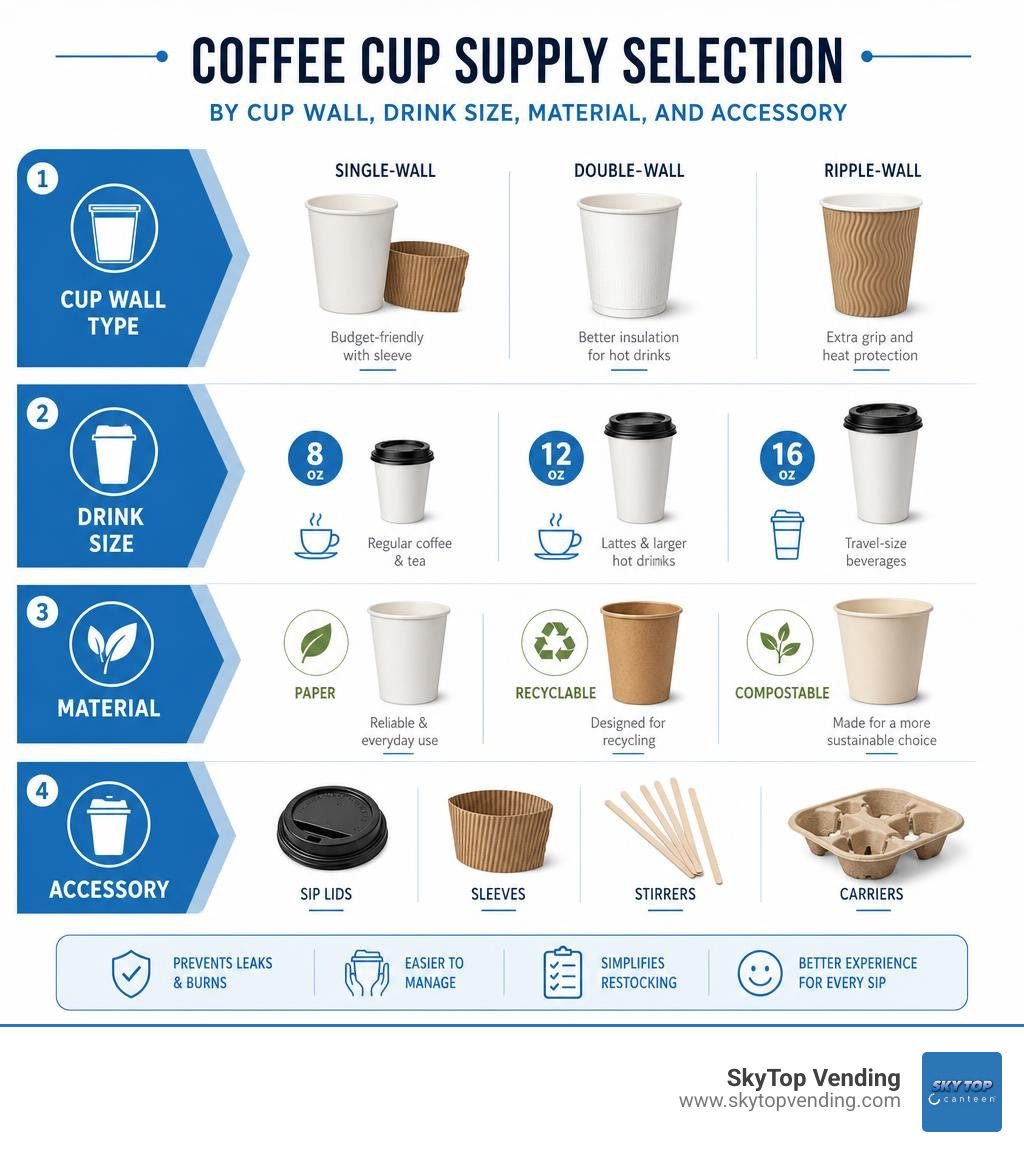
The right Coffee cups supplies make hot and cold drink service safer, cleaner, and easier to manage. Start with the beverage: choose single-wall cups for lower-cost service with sleeves, double-wall or ripple-wall cups for hot drinks that need better hand protection, and matching lids for every rim size. Then select paper, recyclable, or compostable materials that fit your waste-handling plan.
For most offices, cafés, events, and guest areas, a practical starting set includes:
- 8 oz cups for regular coffee and tea
- 12 oz cups for lattes and larger hot drinks
- 16 oz cups for travel-size beverages
- Secure sip lids, sleeves, stirrers, and carriers for grab-and-go service
Good cup choices prevent leaks, reduce burns, simplify restocking, and give employees or guests a more reliable coffee break. Custom printing can also turn an everyday cup into a simple brand touchpoint.
I am Gil Lipkin, and this guide will help you compare cup types, accessories, materials, and ordering options for dependable beverage service.
Key Coffee cups supplies vocabulary:
Essential Coffee Cups Supplies: Wall Types, Materials, and Performance
Selecting the right drinkware for your workplace or food-service setup requires balancing thermal performance, guest comfort, material sustainability, and unit economics. When piping-hot coffee is brewed at temperatures approaching 200°F, serving it in an uninsulated or poorly coated container creates safety hazards and spills.
High-performance paperboard must balance internal moisture barriers with external structural rigidity. Understanding how wall layers interact with liquid barrier coatings ensures every drink stays hot without scalding your guests or compromising the cup’s base seam.
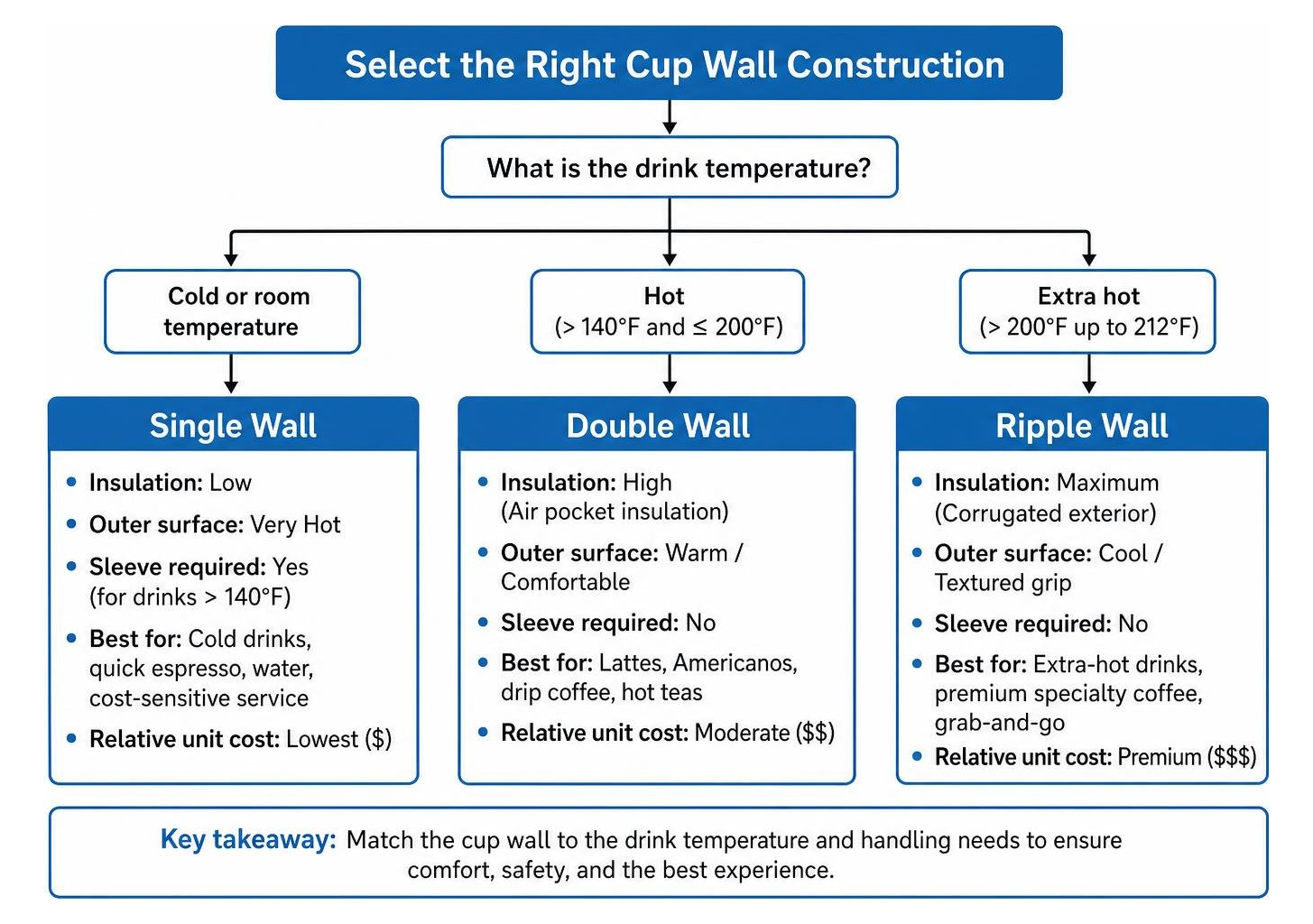
| Cup Wall Construction | Insulation Level | Outer Surface Temperature | Sleeve Required? | Best Drink Applications | Relative Unit Cost |
|---|---|---|---|---|---|
| Single Wall | Low | Very Hot | Yes (for drinks > 140°F) | Cold drinks, quick espresso, water, cost-sensitive service | Lowest ($) |
| Double Wall | High (Air pocket insulation) | Warm / Comfortable | No | Lattes, Americanos, drip coffee, hot teas | Moderate ($$) |
| Ripple Wall | Maximum (Corrugated exterior) | Cool / Textured grip | No | Extra-hot drinks, premium specialty coffee, grab-and-go | Premium ($$$) |
Single Wall vs. Double Wall vs. Ripple Wall Construction
The physical construction of your disposable hot cups dictates whether your team needs secondary accessories like corrugated sleeves.
Single-wall paper cups represent the most traditional, lightweight format. Consisting of a single layer of food-grade paperboard (typically around 300 gsm), single-wall cups offer low storage volume and minimal per-unit pricing. However, because heat transfers directly through the paper, serving coffee above 140°F in a single-wall cup without an external sleeve causes physical discomfort and potential burn risks.
Double-wall cups integrate an inner paper layer bonded to an outer paper shell with an insulating pocket of air trapped between them. This air barrier drastically slows thermal conduction. Drinks stay steaming hot longer, while the outer surface remains comfortable to hold. Double-wall cups eliminate the recurring cost, clutter, and extra labor of stocking separate cardboard sleeves.
Ripple-wall cups take insulation a step further by wrapping the outer cup in an exterior corrugated kraft paper sheet. This creates a textured, ridged surface that insulates against boiling-hot contents up to 212°F while providing a non-slip grip. Ripple cups provide high structural rigidity, resisting hand crushing during transit in commercial settings.
Materials, Linings, and Eco-Friendly Certifications
Raw paperboard is inherently porous and requires an internal barrier lining to hold liquids without softening or leaking. Commercial options range across three primary coating technologies:
- Traditional Polyethylene (PE) Lining: A thin layer of food-grade petroleum-based polymer applied to the interior paper surface. PE coatings provide leak resistance against hot acidic liquids for hours, complying with FDA food-contact standards. However, separating the plastic film from paper pulp requires specialized recycling infrastructure.
- Aqueous Water-Based Coatings: Aqueous-lined cups utilize a dispersion coating made primarily of water-based polymers that penetrate the paper fibers. These cups offer standard leak resistance while remaining repulpable in standard commercial paper recycling streams.
- Polylactic Acid (PLA) Bio-Linings: Plant-derived bioplastics synthesized from renewable plant starches like corn. When paired with FSC-certified paperboard sourced from responsibly managed forests, PLA-lined cups are commercially compostable under industrial composting facilities, breaking down without leaving toxic synthetic microplastics.
When stocking your inventory, choosing certified bulk paper hot cups guarantees that your paper products meet strict international safety and environmental benchmarks.
Cup Sizing, Accessories, and Compatibility Guide
A functional beverage station relies on standardized sizing and tightly fitted accessories. Mismatched lids and unstable cup bases cause counter mess and accidental burns. Keeping your breakroom functional means selecting an intentional sizing matrix supported by everything your office breakroom needs to stay caffeinated.

Choosing the Right Sizes for Your Coffee Cups Supplies
Different beverage formats require specific fluid capacities to accommodate milk froth, syrups, and safe head space below the rim:
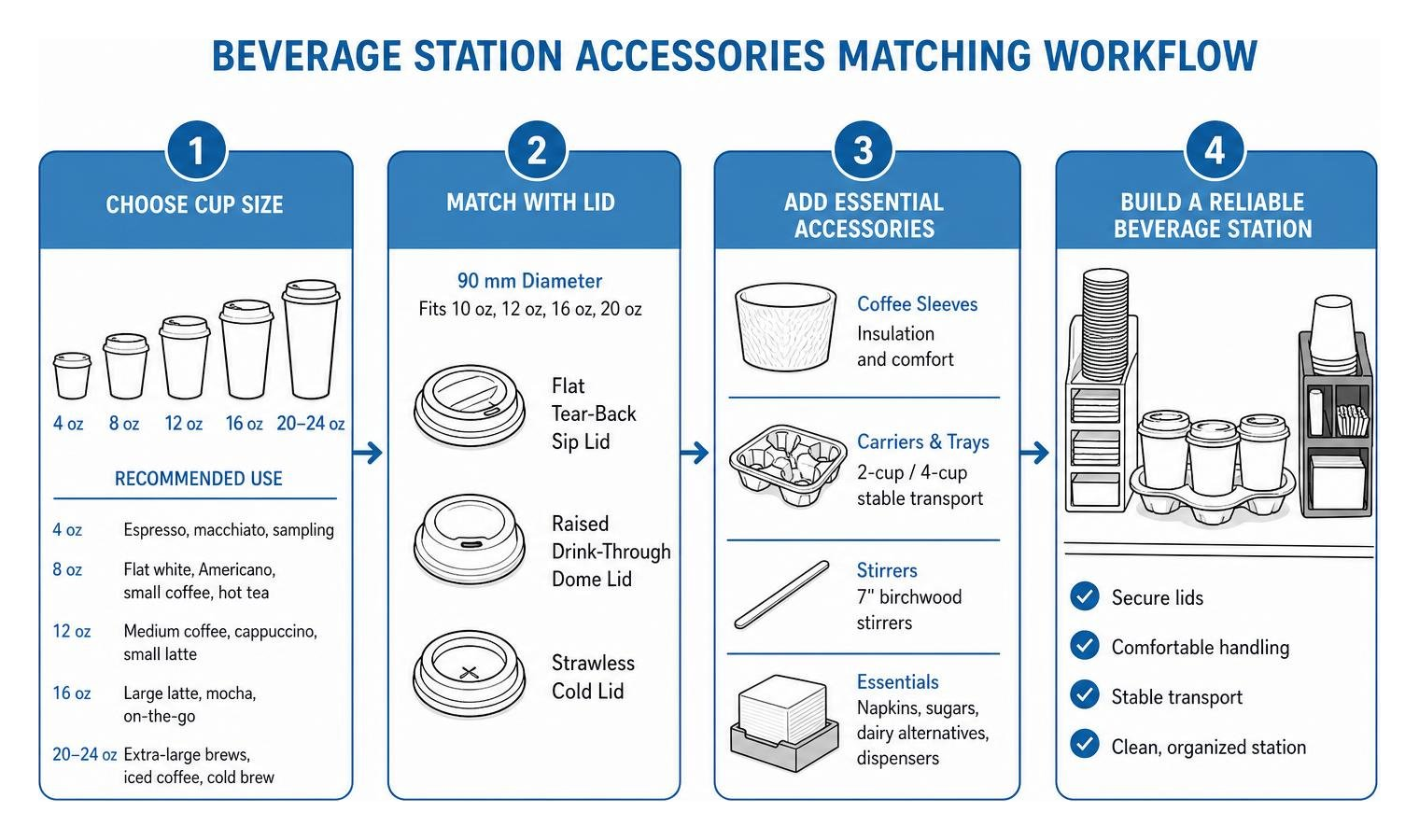
- 4 oz Cups: The dedicated vessel for single and double espresso shots, macchiatos, and sampling stations.
- 8 oz Cups: Ideal for traditional flat whites, Americanos, small drip coffees, and hot tea.
- 12 oz Cups: The commercial sweet spot. Accommodates standard medium drip brews, cappuccinos, and small lattes with adequate space for milk microfoam.
- 16 oz Cups: Perfect for large lattes, specialty mochas, and on-the-go commuters who want travel-sized servings.
- 20 oz to 24 oz Cups: Best suited for extra-large morning brews, iced coffees, or cold-brew infusions paired with ice.
Standardizing around 8 oz, 12 oz, and 16 oz hot cups simplifies purchasing while covering the beverage volume demands of modern coffee equipment.
Essential Accessories: Lids, Sleeves, Trays, and Stirrers
A cup is only as dependable as the accessories paired with it:
- Lids: High-volume operations commonly choose between flat tear-back sip lids, raised ergonomic drink-through dome lids, and strawless cold lids. When outfitting your counter with high-grade lids for coffee cups, prioritize 90 mm diameter tops that snap securely across multiple cup sizes (such as 10 oz, 12 oz, 16 oz, and 20 oz cups), cutting lid inventory requirements in half.
- Coffee Sleeves: For single-wall setups, embossed kraft paper sleeves create a protective buffer between hot paper and fingertips.
- Carriers and Trays: Molded pulp 2-cup and 4-cup drink trays ensure stable multi-drink transport without tipping.
- Stirrers and Essentials: Natural 7-inch birchwood stir sticks provide a sturdy, splinter-free, compostable alternative to brittle plastic stirrers. Pair these with dispensers for napkins, raw sugars, and dairy alternatives to keep counters clean.
Custom Branding Options and Ordering Logistics
Custom-branded coffee cups turn routine caffeine runs into professional marketing assets. Custom-printed paper drinkware reinforces your brand identity whether you operate a boutique café or want to upgrade client hospitality in a corporate lounge. Aligning your custom paper goods with your bean selection is key to brewing success and finding the best coffee for businesses.

Printing Methods, Colors, and Design Proofs
Modern digital and offset printing technologies offer high-fidelity graphics across full cup circumferences:
- CMYK Full-Wrap Printing: Uses standard four-color process printing to render photographic designs, color gradients, and complex patterns that cover the entire cup surface from rim to base seam.
- PMS Spot Color Printing: Utilizes the Pantone Matching System to guarantee exact corporate color reproduction on logos and typography.
- Finishes and Coatings: Choose between subtle matte finishes, high-gloss sheens, tactile soft-touch laminates, or targeted spot UV varnish to highlight logos against kraft or solid-color backgrounds.
When preparing design files, build artwork on direct manufacturer templates that account for the cup’s conical curvature. Keep typography inside designated safety margins, set vector graphics in CMYK color space at 300+ DPI, and maintain a 3 mm bleed margin along die-cut edges.
Lead Times, Minimum Order Quantities, and Common Pitfalls
Sourcing branded cups requires coordinating production schedules and volume minimums:
- Minimum Order Quantities (MOQ): Digital short-run printing allows orders starting as low as 100 to 500 units per artwork run—ideal for seasonal promos, pop-ups, and regional events. Offset commercial runs generally start at 1,000 to 5,000 units, significantly reducing per-unit costs.
- Production Turnaround: Standard production averages 8 to 10 business days following final digital proof approval. Rush production options can compress timelines to 5 to 6 business days prior to dispatch.
- Proof Approval Verification: Before releasing designs for manufacturing, check your proofs carefully:
- Check 1: Verify spelling, phone numbers, website URLs, and QR code scan destinations.
- Check 2: Confirm artwork orientation aligns with seam placement to avoid splitting primary logos across cup joins.
- Check 3: Check contrast ratios to ensure dark typography does not blend into textured kraft backgrounds.
- Check 4: Ensure lid snap rim clearance remains free of heavy ink build-up.
Sourcing Strategy and Inventory Management
Effective beverage inventory management relies on balancing storage capacity against supply consumption patterns, ensuring high-capacity commercial coffee machines for every office need never sit idle due to missing consumables.
Cost Analysis and Bulk Ordering Coffee Cups Supplies
Per-unit cup costs decrease substantially at higher volume thresholds:
Purchasing by the master case or pallet lot secures volume discounts, lowers packaging waste, and shields operations from freight price fluctuations. Consolidating orders across matching rim-size cups and universal snap lids reduces unused inventory, helping create tailored business coffee solutions with low total cost of ownership.
Storage Best Practices and Safe Hot Beverage Handling
Proper inventory handling preserves the structural integrity of paper cups:
- Climate-Controlled Storage: Store paper products in clean, dry spaces between 50°F and 80°F, away from direct sunlight, steam vents, and damp concrete floors. High humidity weakens paperboard fibers and compromises heat-sealed seams.
- Optimized Stacking: Keep cups nested within their protective polyethylene inner sleeves inside shipping cartons until loaded into spring-loaded counter dispensers. This prevents airborne dust accumulation and keeps cup rims round for a leak-free lid seal.
- Inventory Rotation: Practice First-In, First-Out (FIFO) stock rotation to ensure older cartons are used before newly arrived pallets.
- Thermal Safety: Verify your cup supplier guarantees heat resistance up to 212°F with zero adhesive softening or chemical off-gassing during service.
Frequently Asked Questions
How do I ensure disposable cup lids fit securely without leaking?
Lid leakage usually happens when mixing different brands or rim diameters. Ensure your paper cup’s outer lip matches the lid’s internal snap groove (typically 90 mm for 10 oz through 20 oz hot cups). When snapping lids on, press evenly around the entire circumference until you hear a distinct click. Always source cups and companion lids from the same manufacturing specifications to guarantee a tight seal.
What is the difference between aqueous-coated and traditional PE-lined cups?
Traditional paper cups use a laminated polyethylene (PE) plastic sheet inside the cup wall to stop moisture. While effective, separating this plastic layer requires specialized recycling equipment. Aqueous-coated cups use a water-based dispersion coating that blends directly with paper fibers. This barrier provides comparable heat and leak resistance while allowing the cup to be processed in standard municipal paper recycling facilities without extra chemical separation.
Do double-wall paper cups completely eliminate the need for coffee sleeves?
Yes. Double-wall cups are built with an internal air gap between two bonded layers of paperboard. This construction insulates hot beverages while keeping the exterior surface comfortable to hold, eliminating the need to buy, stock, or assemble separate cardboard sleeves.
Conclusion
A well-planned hot beverage service requires more than just premium roasts—it depends on reliable, insulated, and properly sized cups, leak-resistant lids, and practical accessories. Matching your wall construction, linings, and sizing matrix to your daily serving volume protects your team from spills, keeps counters organized, and improves the daily coffee experience.
At SkyTop Vending, we deliver turnkey breakroom, vending, and micro-market services backed by a 99.4% client retention rate since 1977. Whether you need fully managed pantry consumables, commercial brewers, or a complete beverage upgrade, we provide “Service the way YOU like it.” Contact us today to upgrade your workplace with our professional coffee service in Las Vegas.