
Why Office Pantry Management Makes or Breaks Your Workplace
Office pantry management is the system of stocking, organizing, budgeting, and maintaining a workplace food and beverage space so employees always have what they need — without the chaos.
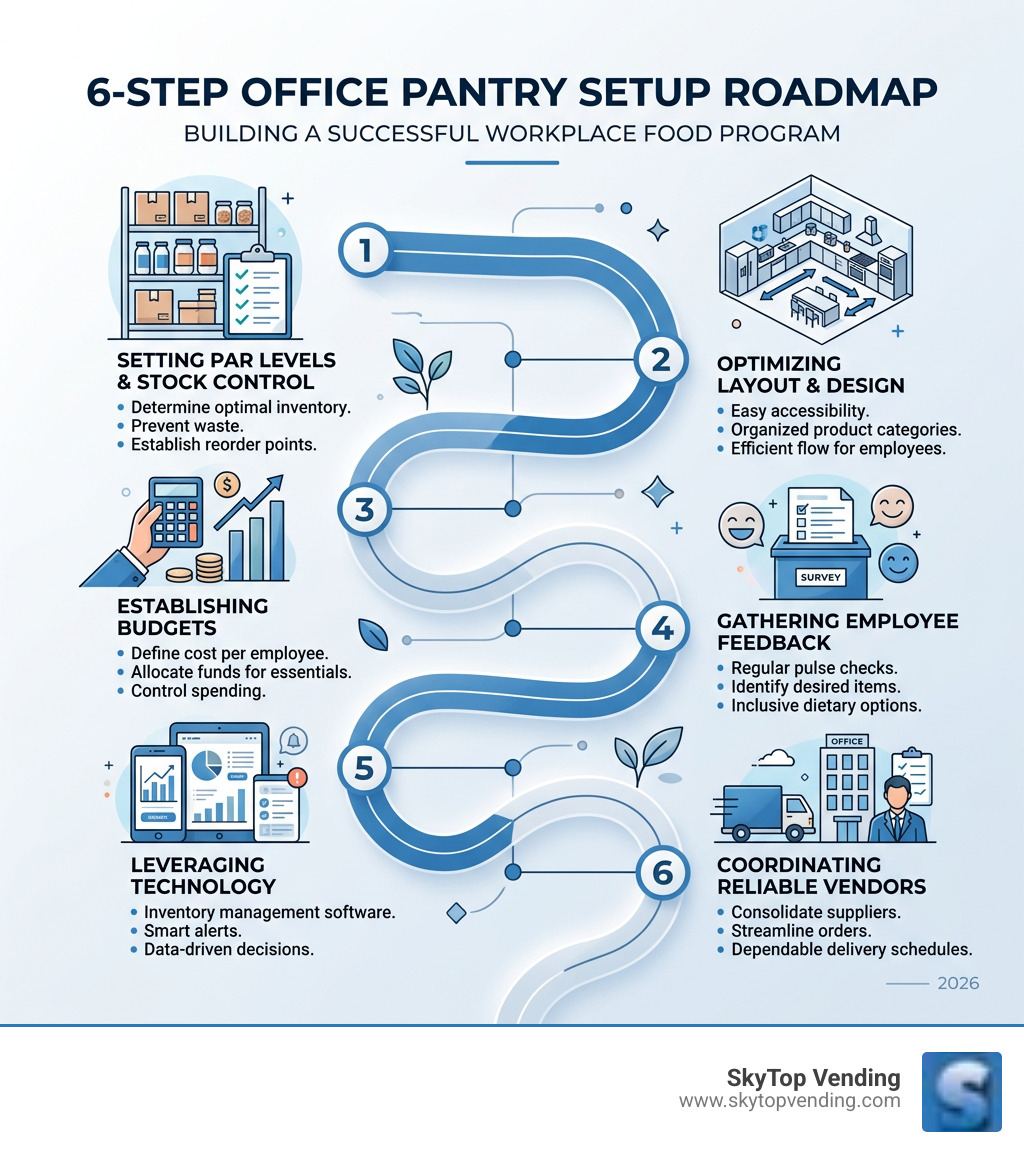
Here’s a quick breakdown of what effective pantry management covers:
- Stock control — setting par levels, rotating products, and preventing waste
- Budgeting — deciding cost per employee, restocking frequency, and cost-sharing models
- Layout and design — placing items where people can easily grab them
- Vendor coordination — consolidating orders and building reliable delivery schedules
- Employee feedback — using data and requests to keep offerings fresh and inclusive
- Technology — using dashboards, alerts, and analytics to manage it all smarter
If you get these six things right, the pantry practically runs itself.
The breakroom used to be an afterthought — a coffee pot, a vending machine, maybe a sad bowl of mints by the reception desk. That era is over.
Today, a well-run office pantry is one of the most cost-effective tools a company has for retaining employees, boosting productivity, and building a workplace culture people actually want to show up to. Food and beverage perks now rank among the top three most valued workplace benefits, according to SHRM.
But here’s the catch: pantry management done poorly can quietly drain time, budget, and morale. On average, managing a pantry in-house takes around 25 hours per week — that’s over 1,200 hours a year. For a facility manager already juggling a dozen other responsibilities, that’s a serious problem.
This guide gives you the practical systems, smart strategies, and vendor insights you need to run a pantry program that employees love — without it becoming a second job.
Office Pantry Service vs. Vending: Choosing the Right Model
When we talk about refreshing the breakroom, we often see confusion between a vending machine service and an office pantry service. While both provide snacks and drinks, the “vibe” and the financial model are completely different.
An office pantry service is a fully managed breakroom solution where we stock your shelves with snacks, beverages, and essentials customized to your team’s preferences. The key difference? The company covers the cost, and employees enjoy the items for free. It functions like an in-house kitchen where everything is grab-and-go.
In contrast, with a traditional vending service, employees pay for each item individually. While vending requires zero budget from the employer, it doesn’t offer the same “wow factor” or cultural boost that a free pantry provides. Many of our clients in the Las Vegas Valley actually use a hybrid model—offering free staples like coffee and fruit in a pantry setup while keeping a vending machine for premium electronics or heavy meals.
| Feature | Office Pantry Service | Vending Machine Service |
|---|---|---|
| Cost to Employee | Free ($0) | Pay-per-item |
| Cost to Employer | Monthly budget/consumption | Usually $0 (commission-based) |
| Accessibility | Open shelving/Glass-front fridges | Locked machine |
| Variety | High (Fresh food, bulk snacks, kegs) | Limited to machine slots |
| Cultural Impact | High (Perceived as a major perk) | Moderate (Convenience only) |
Choosing a managed breakroom solution means you aren’t just buying snacks; you’re buying back your time. Instead of making emergency runs to big-box stores, a provider handles the stocking, cleaning, and rotation for you.
The ROI of Office Pantry Management
Is spending money on “free” snacks actually a good business move? The data says a resounding yes. Office pantry management isn’t just a line item; it’s an investment in your most expensive asset: your people.
Retention and Recruitment
Replacing an employee is incredibly expensive. According to Gallup, the cost of replacing an individual can range from 50% to 200% of their annual salary. When you factor in recruiting, onboarding, and the lost productivity during the gap, a $500-a-month snack budget looks like a bargain. In the competitive Las Vegas job market, these perks act as “signals” to talent that your company cares about the daily experience of its workers.
Productivity and Time-Saving
Think about the “snack run.” If an employee leaves the office twice a day to grab a coffee or a bag of chips because the breakroom is empty, they are likely losing over an hour of productive time daily. By providing high-quality options on-site, you keep the team engaged and energized.
Speaking of energy, coffee is the lifeblood of the modern office. A SWNS survey found that the average coffee-drinking office worker needs more than two cups of coffee just to feel productive. If your pantry doesn’t have a reliable coffee program, your team is likely wandering off-site to find one.
The Financial Upside
While it seems counterintuitive, a well-managed pantry can actually save money. Research suggests that companies can save roughly $800 annually per employee by offsetting the costs of snacks and beverages through consolidated vendor programs rather than disorganized, ad-hoc purchasing.
Designing a High-Functioning Physical Layout
A great pantry isn’t just about what’s on the shelves; it’s about where those shelves are. If your breakroom is a cramped corner where people bump into each other, it won’t be the culture-builder you want it to be.
The Anatomy of a Winning Layout
We recommend focusing on “functionality over aesthetics”—though with modern equipment, you can usually have both.
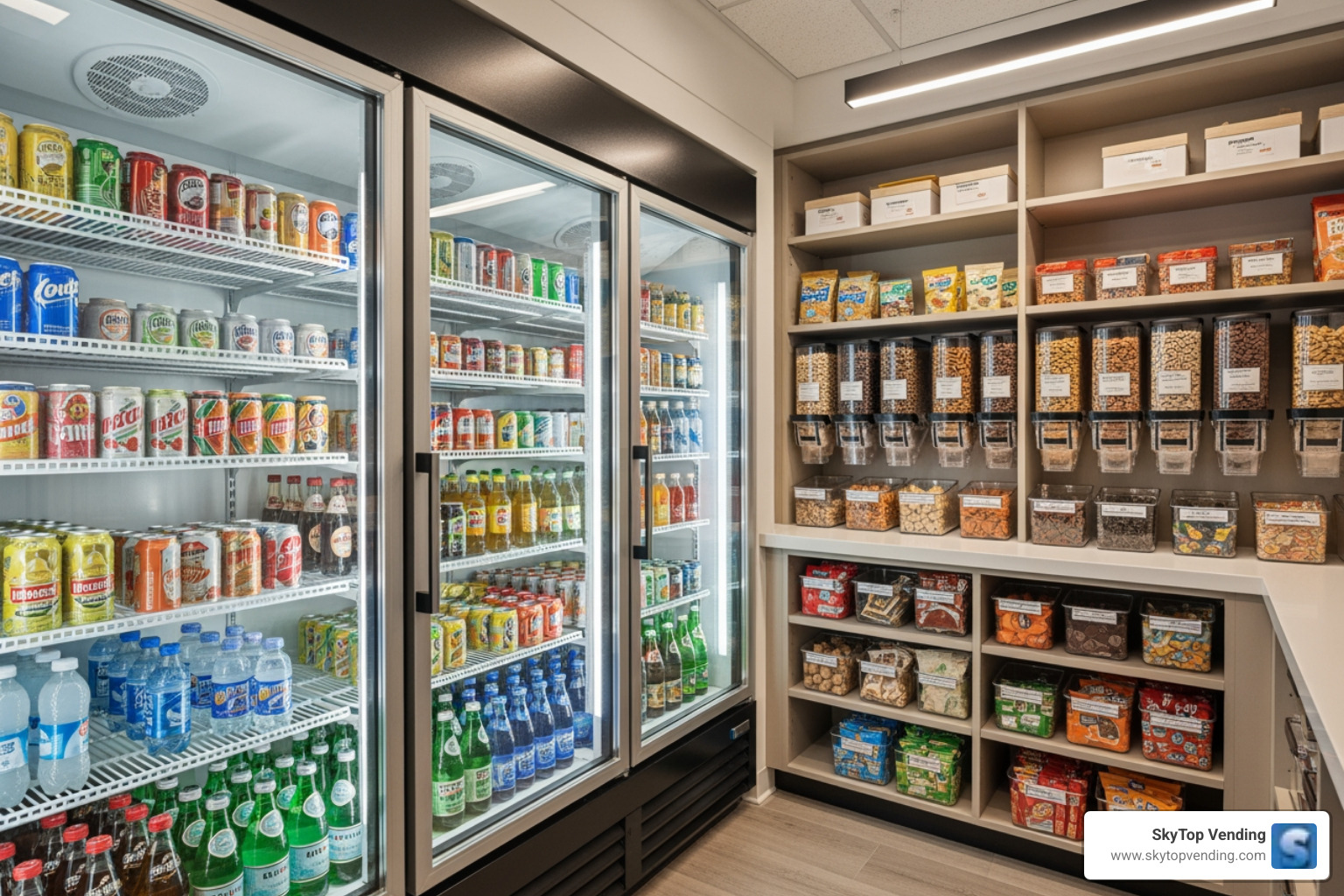
- High-Traffic Placement: Place the most popular items (like the coffee machine and water dispenser) in areas that allow for a natural flow.
- Glass-Front Fridges: Visibility is key. When employees can see the smart water dispensers or fresh food kiosk options from across the room, it reduces the time spent hovering with the door open.
- Coffee Zones: Create a dedicated station for brewers, grinders, and “the fixings” (milks, sweeteners, stirrers). This prevents the “coffee huddle” from blocking access to the snacks.
- Bulk Containers: Using gravity bins for nuts or cereal reduces packaging waste and makes the space look much cleaner than a pile of half-open cardboard boxes.
Strategic Layouts for Employee Interaction
The best pantries act as “collision points” where people from different departments actually talk to each other. By creating a social space with comfortable seating near the beverage station, you encourage the kind of inter-departmental relationships that drive innovation.
Inventory Systems and the Power of Par Levels
The biggest headache in office pantry management is the “mystery biology project” in the fridge or the realization that you’ve run out of oat milk on a Tuesday morning. This is where The Art of Order: Transforming Your Pantry with Expert Services comes into play.
The FEFO Method
Forget FIFO (First In, First Out). In the food world, we use FEFO (First Expired, First Out). This means the items with the closest expiration dates are moved to the front of the shelf. This simple rotation strategy drastically reduces waste and ensures your team isn’t reaching for a stale granola bar.
Setting Par Levels for Office Pantry Management
“Par level” is a fancy industry term for the minimum amount of stock you need to have on hand to get through to the next delivery without running out.
To set your par levels, track your usage for two weeks. If you find your team eats 10 boxes of protein bars a week, your “Par” might be 12 boxes.
- Display: 4 boxes
- Backstock: 8 boxes
When the delivery driver arrives and sees only 2 boxes left, they know exactly how much to replenish to hit that par level of 12. This prevents hoarding and ensures you aren’t over-ordering items that just sit on the shelf gathering dust.
Budgeting and Scaling for Growing Teams
How much should you actually spend? Budgeting for a pantry is often the hardest part for office admins.
Cost Per Employee Tiers
Generally, office coffee programs cost between $2 and $14 per employee per month. For a full pantry (snacks, drinks, and fruit), we see three common tiers:
- Basic ($1–$5 per employee/day): Bulk snacks, standard coffee, and tea.
- Moderate ($6–$10 per employee/day): A mix of name-brand snacks, Greek yogurt, and premium coffee.
- Premium ($10+ per employee/day): Fresh meals, gourmet salads, cold brew on tap, and organic options.
Data-Driven Office Pantry Management
As you grow, you can’t rely on gut feelings. Modern managed pantry services provide real-time dashboards. You can see exactly what’s moving and what isn’t. If the kale chips are “gathering dust,” the data will tell you to swap them for something the team actually wants, like protein boxes or local Las Vegas favorites.
To keep costs under control, many companies use spending caps by category. For example, you might cap “Premium Beverages” at 20% of the total budget. You can also implement cost-sharing models, where basic staples are free, but premium “luxury” snacks are subsidized or paid for via a micro market setup.
For more on how to scale these programs as your team grows, check out our guide on Beyond the Breakroom: Elevating Your Office with a Top-Tier Pantry Service.
Frequently Asked Questions about Pantry Services
How do you handle dietary restrictions and inclusive snacking?
Inclusivity is non-negotiable in the modern workplace. We recommend surveying your team annually for allergies and preferences. A successful mix should always include:
- Vegan/Plant-Based: Nut butters, fruit, and dairy-free milk alternatives.
- Gluten-Free: Jerky, popcorn, and certified GF bars.
- Nut-Free: To accommodate severe allergies.
- Low-Sugar: Sparkling waters and raw nuts.
How often should the pantry be restocked?
Restocking frequency depends on your storage space and team size. Most mid-sized offices in the Las Vegas Valley thrive on a twice-weekly schedule. This ensures fresh fruit and dairy stay within their window of peak freshness while allowing the vendor to adjust stock for mid-week spikes in usage.
What are the biggest “don’ts” of pantry management?
- DON’T Stockpile: Buying 50 cases of chips because they were on sale leads to staling and takes up valuable real estate.
- DON’T Use Multiple Vendors: Managing five different invoices from five different delivery services is an administrative nightmare. Consolidate.
- DON’T Ignore Equipment: A dusty coffee machine or a leaking fridge kills the “premium” feel of a pantry instantly. Ensure your service agreement includes regular maintenance and descaling.
Conclusion
At SkyTop Vending, we’ve spent decades perfecting the art of the breakroom. Since 1977, we’ve maintained a 99.4% client retention rate in the Las Vegas Valley because we believe in “Service the way YOU like it.”
Whether you’re a small startup looking to boost morale or a large enterprise needing to scale a multi-floor pantry program, we have the local expertise to make it happen. Stop spending 25 hours a week at Costco and let the pros handle your office pantry management.
Ready to transform your breakroom into a destination? Click here to request your free office pantry proposal and see how we can help your team thrive.
Visit us at https://www.skytopvending.com/ to learn more about our comprehensive solutions.